Environmental Control & Life Support Systems
Research, Development, and Engineering (RD&E) in Aerospace Environmental Control & Life Support Systems (ECLSS) focuses on designing and operating hardware that mimics Earth’s biosphere inside sealed cabins. It bridges mechanical engineering, chemical engineering, biology, materials science, and human factors to keep crews alive and functional in extreme environments—from high-altitude aviation to deep-space habitats.
Closed-Loop Bioregenerative Air Revitalization
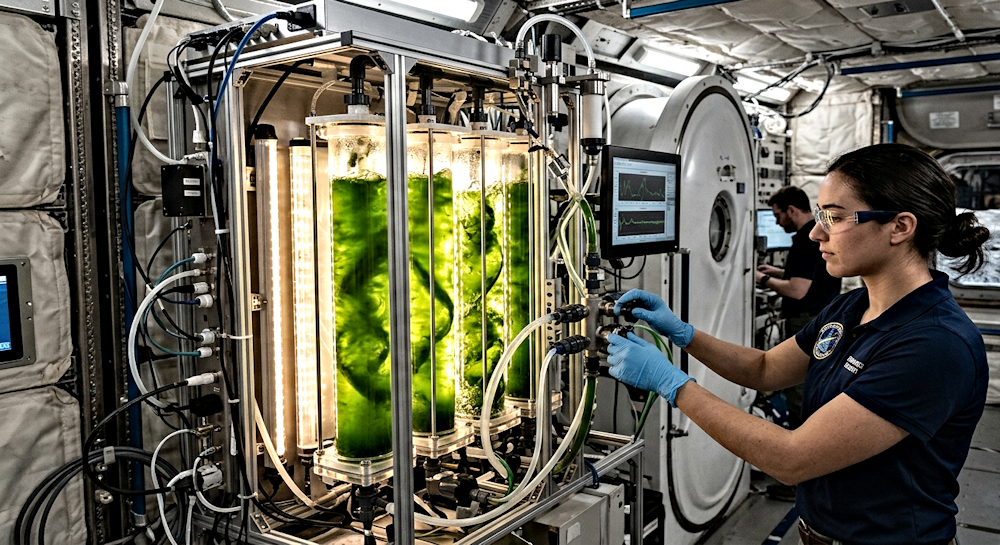
This specialty focuses on using biological systems, such as microalgae and higher plants, alongside chemical processes to absorb carbon dioxide and generate oxygen for long-duration deep-space habitats. Modern research focuses on engineered photobioreactors that maximize photosynthetic efficiency in microgravity while continuously extracting toxic trace contaminants and biomass.
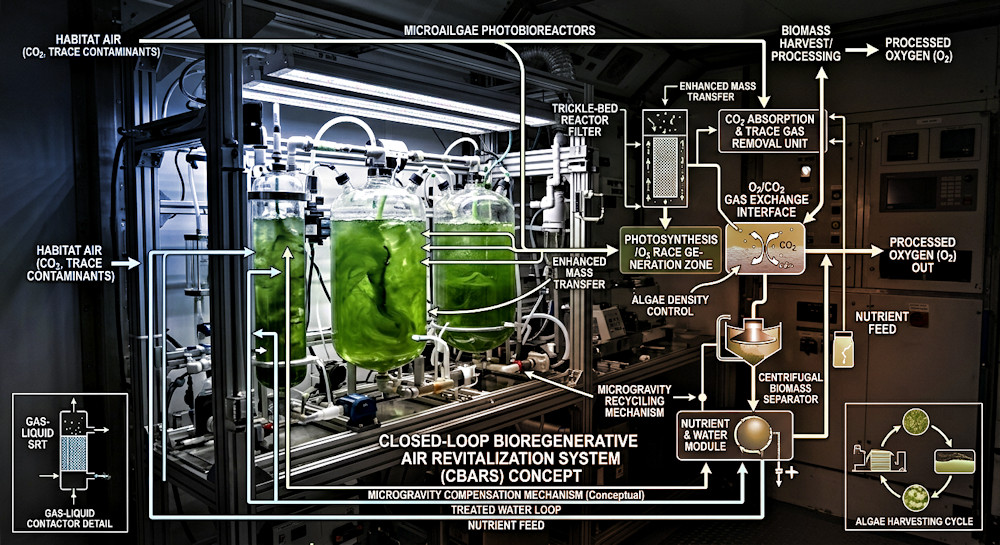
Hybrid Physicochemical and Biological Integration
Modern systems do not rely solely on biology. Instead, chemical scrubbers, Sabatier reactors, and advanced carbon dioxide (CO2) concentrators capture waste air and process it alongside biological loops. CO2 stripped from cabin air is directed into photobioreactors, where microalgae or fast-growing higher plants utilize photosynthetic light reactions to convert CO2 and water into oxygen (O2) and edible biomass:
6 CO2 + 6 H2O + light -> C6H12O6 + 6 O2
This hybrid architecture balances rapid-response chemical stabilization with sustainable, long-term biological regeneration.
Advanced Photobioreactor (PBR) Design
To operate effectively in microgravity, recent photobioreactor architectures incorporate several crucial technological innovations:
- Microgravity Fluidics and Gas Exchange: Gas-permeable membrane modules and active peristaltic mixing allow bubble-free CO2 delivery and O2 extraction. This eliminates the need for buoyancy-driven gas separation, which fails in weightlessness.
- Targeted LED Photokinetics: Dynamic, multi-wavelength LED arrays tune light intensities to specific microalgae absorption peaks (such as red and blue spectrums), maximizing photosynthetic yield per watt while preventing photoinhibition.
- High-Density Culture Management: Automated microfluidic harvesting systems continuously thin out dense microalgae cultures. This maintains optimal light penetration throughout the growth media and yields protein-rich biomass for supplemental nutrition.
Trace Contaminant and Biomass Control
Beyond basic gas exchange (CO2 to O2), these closed-loop biological systems perform environmental cleansing:
- Volatile Organic Compound (VOC) Scavenging: Integrated microbial mats and specialized algae strains actively absorb airborne trace toxins - such as ammonia, formaldehyde, and methane - converting them into non-toxic cellular material.
- Dual-Duty Thermal Control: Water-based algal media serves a dual purpose as a thermal heat sink, absorbing cabin heat loads while maintaining steady culture temperatures.
- Extreme-Environment Strain Engineering: Researchers utilize eurythermic and psychrotolerant (cold-tolerant) microalgae species capable of surviving unexpected habitat temperature fluctuations without collapsing O2 production rates.
Advanced Closed-Loop Water Recovery & Recovery Processing
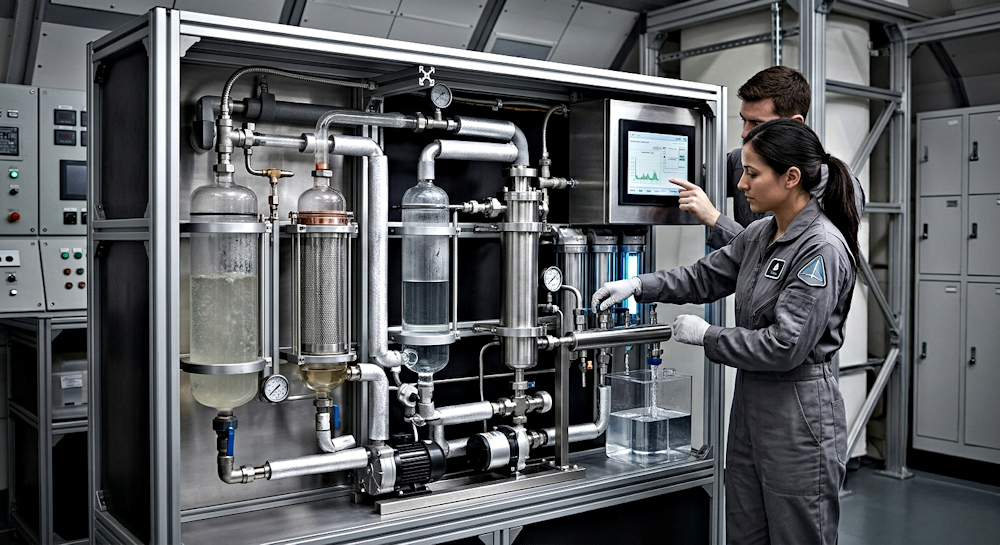
This field concentrates on converting wastewater, urine, and atmospheric condensate into ultrapure drinking water using low-energy, highly resilient physical and chemical methods. Engineers develop novel membrane distillation, catalytic oxidation, and supercritical water oxidation systems to push water loop closure beyond 98%, eliminating reliance on consumable resupply filters.
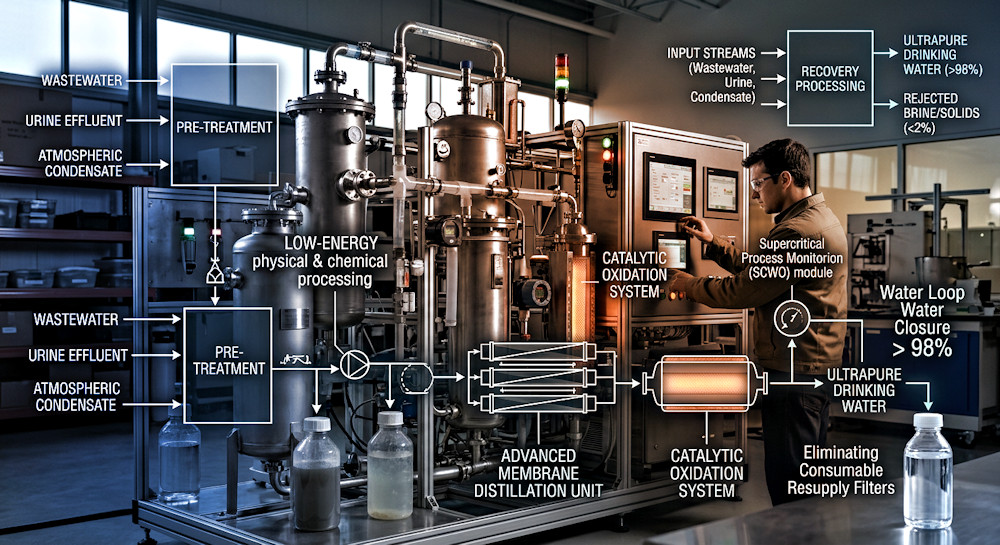
Extreme Closure Separation Technologies
Reaching the 98%+ water loop closure target requires moving past traditional resupply-heavy filtration media and multi-stage distillation assemblies:
- Membrane Distillation (MD): Thermally driven membrane separation operates at lower pressures and temperatures than traditional distillation. Driven by vapor pressure differentials across hydrophobic membranes, it extracts high-purity water vapor from concentrated brine and urine streams while rejecting non-volatile contaminants.
- Supercritical Water Oxidation (SCWO): Operating above water's thermodynamic critical point (374 deg C, 22.1 MPa), SCWO transforms water into a dense fluid where organic waste rapidly oxidizes without flame. Urine solids, organic compounds, and complex nitrogenous wastes convert entirely into inert carbon dioxide (CO2), gaseous nitrogen (N2), and clean water, leaving only inorganic mineral salts behind.
- Catalytic Oxidation Loops: Gas-phase and liquid-phase catalytic systems burn off trace volatile organics and low-molecular-weight compounds (such as alcohols and urea intermediates) at reduced operating temperatures, preventing contaminant buildup without requiring frequent consumable bed changes.
Brine Recovery and Salt Management
The highest water loss in space habitats occurs in concentrated brine residuals. To reclaim this remaining moisture, modern architectures utilize two complementary approaches:
- Capillary Evaporation: This uses capillary forces and hydrophobic vapor-permeable surfaces to drive water extraction from high-salinity slurries. The advantage is it operates passively without moving mechanical parts; resilient against salt scaling.
- Freeze Thaw Crystallization: This selectively freezes pure water crystals out of concentrated brine solutions before melting them down for processing. The advantage it reduces thermal energy inputs while effectively separating dissolved inorganic salts.
Low-Energy Upgrades and Direct Monitoring
To reduce life-support power draw and maintenance overhead, modern recovery systems incorporate smart, low-wear components:
- Forward Osmosis (FO) Contactors: Passive forward osmosis membranes utilize concentrated draw solutions to pull purified water across semi-permeable barriers, drastically cutting the pumping energy required prior to final polishing steps.
- Reagentless Electrochemical Disinfection: Instead of relying on consumable chemical biocides (such as iodine or silver ions), solid-state electrochemical cells generate in-situ hydroxyl radicals and reactive oxygen species to keep holding tanks microbially sterile.
- Reagentless Optical Quality Monitoring: Multi-spectral fluorescence sensors analyze organic carbon levels and microbial loading in real time, eliminating the need for single-use chemical testing kits.
Microgravity Solid & Liquid Waste Management and Resource Recovery
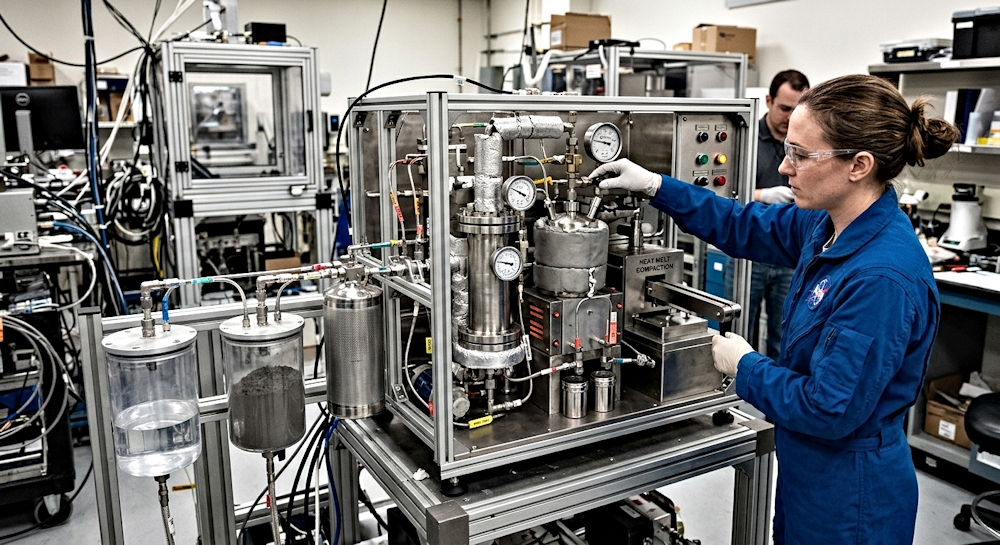
Research here addresses the collection, stabilization, sterilization, and energetic reuse of biological and synthetic human waste in zero or partial gravity. Key technologies include supercritical water oxidation, pyrolysis, and heat-melt compaction, which render waste bio-safe while extracting valuable resources like water, methane, and raw soil supplements for crop beds.
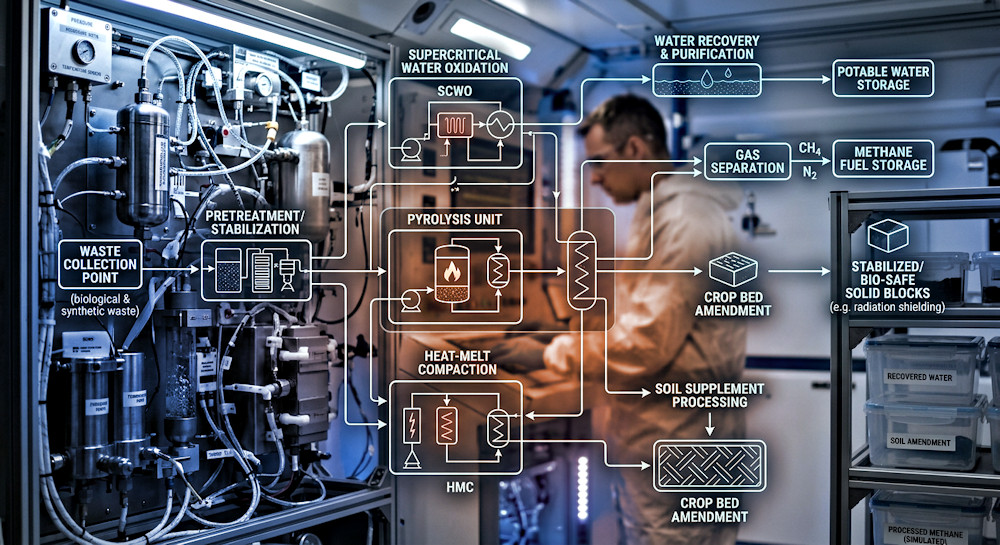
Thermal Processing and Volume Reduction
Processing dry trash, wet hygienic wipes, and solid human waste requires rendering materials microbially inert while reclaiming moisture:
- Heat-Melt Compaction (HMC): Waste streams are mechanically compressed into high-density tiles under thermal treatment (150 to 180 deg C). This process boils off residual liquid for recovery in the water loops and sterilizes the solid residue, preventing biological off-gassing. The resulting dense structural tiles can line habitation walls to serve as secondary radiation shielding against galactic cosmic rays.
- Pyrolysis and Gasification: Heating dry carbonaceous waste to high temperatures (400 to 800 deg C) in oxygen-starved environments breaks complex polymers into biochar and syngas (primarily carbon monoxide, hydrogen, and methane). The syngas feeds downstream methanation reactors or Sabatier systems to produce fuel and water, while the inert carbon char acts as a filtration medium or soil matrix.
- Torrefaction: A lower-temperature thermal pretreatment (200 to 300 deg C) that drives off volatile organic compounds (VOCs) and water, turning problematic organic waste into stable, hydrophobic solids that resist microbial decay during long-term storage.
Advanced Oxidation and Deep Destruction
For high-moisture organic feeds, such as raw feces, food waste, and high-salinity brines, thermal drying consumes prohibitive amounts of energy. Advanced wet destruction technologies solve this without requiring pre-drying:
- Supercritical Water Oxidation (SCWO): Operates above 374 deg C and 22.1 MPa. It yields ultra-pure H2O, CO2, and inert ash/salts. Its primary role is the rapid, complete destruction (greater than 99.9%) of biological waste, eliminating the need for pre-drying.
- Steam Reforming: Operates between 700 and 900 deg C using a steam catalyst. It converts plastic packaging and human waste into fuel gases such as methane (CH4), carbon monoxide (CO), and hydrogen (H2) gas.
- Catalytic Wet Air Oxidation (CWAO): Operates between 180 and 315 deg C under subcritical pressure. It breaks down complex organic solids into short-chain organic acids and N2 gas, providing biodegradable feedstocks for plants or algae.
Resource Recovery and Agricultural Upcycling
Reclaimed waste components are purified and repurposed into functional crop growth media and metabolic inputs:
- Inorganic Salt and Nutrient Recovery: Ash and liquid effluents from SCWO or pyrolysis are processed through mineral extraction loops to recover macro-nutrients (nitrogen, phosphorus, potassium) and micro-nutrients (calcium, magnesium). These recovered salts are metered directly into hydroponic plant nutrient solutions or microalgae growth beds.
- Biological Soil Matrix Synthesis: Inert biochar produced via pyrolysis is combined with mineral ash and treated microbial biomass. This creates a bio-safe, porous soil substitute ("regolith stimulant matrix") capable of holding moisture and hosting beneficial root-zone bacteria for crop beds.
- Nitrogen Fixation and Methane Harvesting: Specialized electrochemical and microbial reactors process urine and nitrogenous waste into gaseous nitrogen (N2) to replenish habitat atmosphere leakage, while capturing released methane (CH4) for use as thermal energy or chemical feedstock.
Space Agriculture & Controlled Environment Agriculture (CEA)
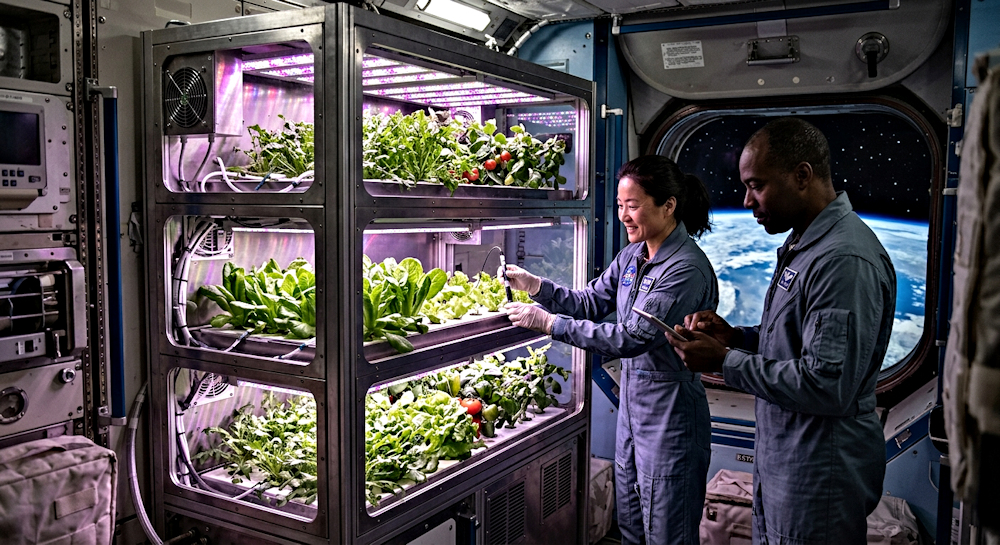
This discipline bridges plant biology and systems engineering to design autonomous, microgravity-compatible growth chambers for food production on long journeys. Engineers integrate targeted LED spectrums, precise hydroponic or aeroponic nutrient delivery, automated root-zone moisture sensing, and crop selection to supplement crew nutrition and mental well-being.
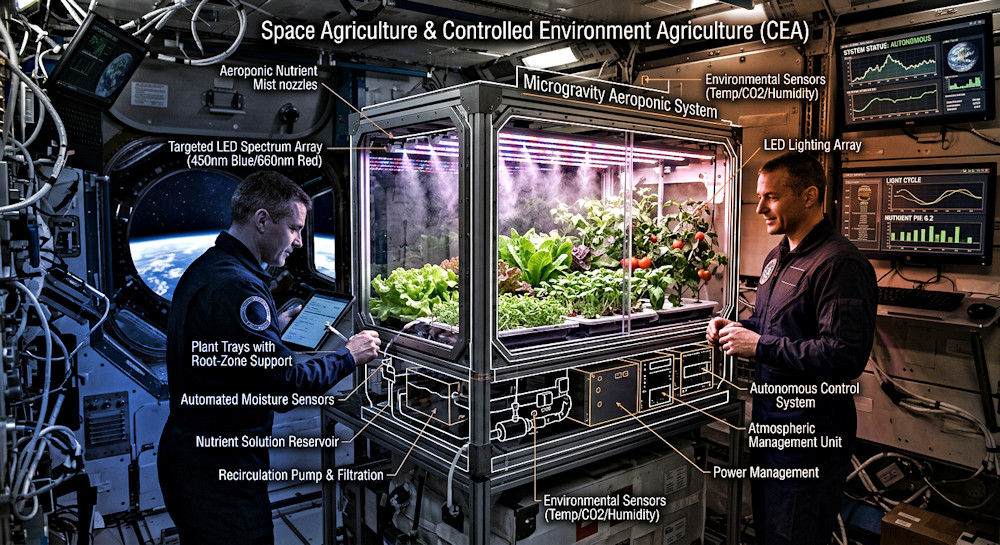
Microgravity Fluidics and Root-Zone Management
Managing liquids without gravity is a primary engineering hurdle in off-Earth farming. Modern growth chambers bypass gravity-dependent drainage using targeted physical mechanisms:
- Micro-Pulsed Aeroponic Misting: Air pressure-regulated, self-cleaning atomizers spray micro-droplets directly onto suspended root systems. Capillary guidance structures hold moisture around the root zone, maximizing surface contact without soaking roots or causing fungal rot.
- Phase-Separating Substrates: Solid-state, porous ceramic media and functionalized biochar mats absorb liquid nutrient solutions via matrix potential rather than gravity, delivering consistent moisture and oxygen directly to root cells.
- Closed-Loop Water and Nutrient Recirculation: Real-time ion-selective sensors monitor nutrient depletion in recirculated runoff, automatically dosing missing micro- and macro-nutrients while recapturing plant transpiration water for zero-waste loop operation.
Dynamic Photobiology and Adaptive Lighting
Current CEA research moves past static lighting to dynamic photobiological manipulation:
- Targeted Dynamic Spectra: Programmable, high-efficiency solid-state LED arrays dynamically adjust wavelength ratios across crop growth phases. High ratios of blue light foster compact, dense vegetative growth in early stages, while red and far-red spectra trigger rapid flowering and crop yield.
- Far-Red and UV Pre-Harvest Conditioning: Short pulses of UV light prior to harvest stimulate secondary metabolite production, boosting crop concentrations of essential dietary antioxidants (such as lutein and zeaxanthin) to protect crew members against deep-space radiation damage.
- Photoperiod Thermal Interlocking: Lighting schedules are synchronized with environmental thermal control loops, dampening habitat power peaks and utilizing heat generated by LED arrays to maintain warm root-zone temperatures during night cycles.
Autonomous Crop Health and Computer Vision
Due to strict limits on astronaut time, crop chamber maintenance relies heavily on robotic and artificial intelligence oversight:
- Multispectral Computer Vision: High-resolution cameras and thermal imaging systems continuously scan canopy leaves, detecting localized water stress, nutrient deficiencies, or fungal pathogens days before visual symptoms appear to the human eye.
- Robotic Pruning and Selective Harvesting: Compact, multi-axis robotic arms equipped with soft-touch end effectors automatically prune non-productive foliage, pollinate flowers, and harvest ripe produce without damaging delicate plant tissues.
- Predictive Yield Modeling: Machine learning algorithms track plant growth rates alongside environmental inputs (ambient temperature, humidity, CO2 partial pressure), predicting harvest timing and nutritional output to streamline crew meal planning.
Microgravity Crop Selection and Well-Being
Plant selection balances nutritional density, harvest speed, growth habit, and psychological benefits:
- Dwarf and Micro-Crop Breeding: Cultivars are selected or gene-edited for extreme dwarfism, rapid growth cycles, and high harvest index (edible mass relative to total plant mass). Examples include micro-tomatoes, dwarf leafy greens, and compact berry bushes.
- Nutritional Targeting: Crops are prioritized based on their ability to produce nutrients that degrade rapidly in stored space food, such as vitamins B1, C, and K, as well as carotenoids.
- Psychological Harvest Integration: Beyond basic nutrition, cultivation provides psychological benefits to crews during long isolated missions. Interacting with living plant canopy, tending crops, and consuming fresh visual and olfactory stimuli offers psychological grounding and alleviates mission fatigue.