Autonomous Aerospace Systems & UAVs
Modern research, development, and engineering in Autonomous Aerospace Systems and Uncrewed Aerial Vehicles (UAVs) focuses on creating intelligent, persistent, and network-centric flight architectures capable of operating across denied, degraded, and intermittently connected operational environments. At the foundational layer, open-architecture autonomy frameworks and distributed edge-intelligence decouple mission planning from centralized command nodes, enabling true autonomous decision-making at the tactical edge.
Open-Architecture Autonomy & Modular Mission Systems
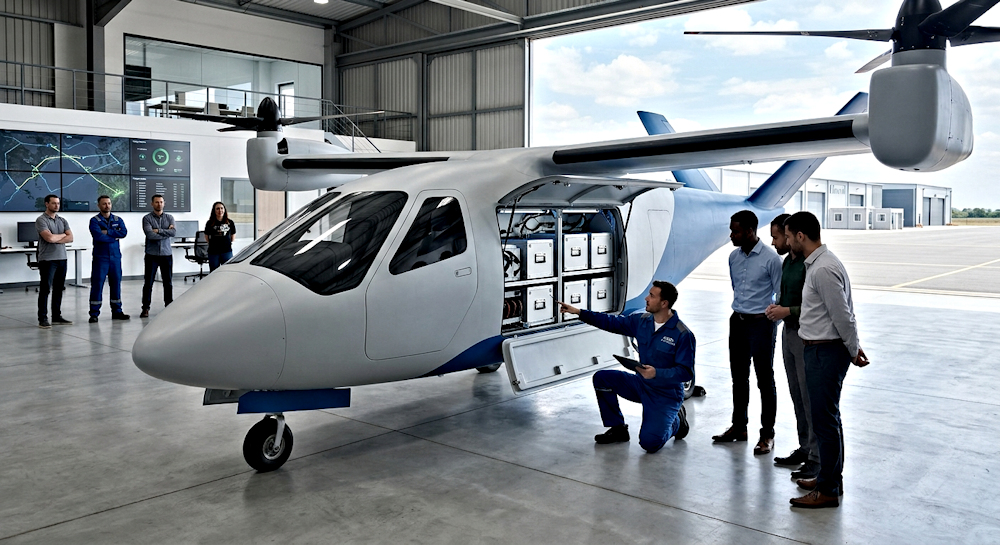
Modern autonomous platforms rely heavily on open, modular hardware and software frameworks that decouple mission management from vehicle-specific implementations. By standardizing autonomy interfaces and behavior models, platforms can deploy new mission profiles, tactics, and countermeasures without triggering lengthy airworthiness re-certification cycles. At the core of this capability are Modular Mission Management Systems that ingest multi-source intelligence feeds—fusing signals intelligence, imagery, electronic data, and collaborative peer updates into a single, automated operational picture for dynamic tasking and re-tasking.
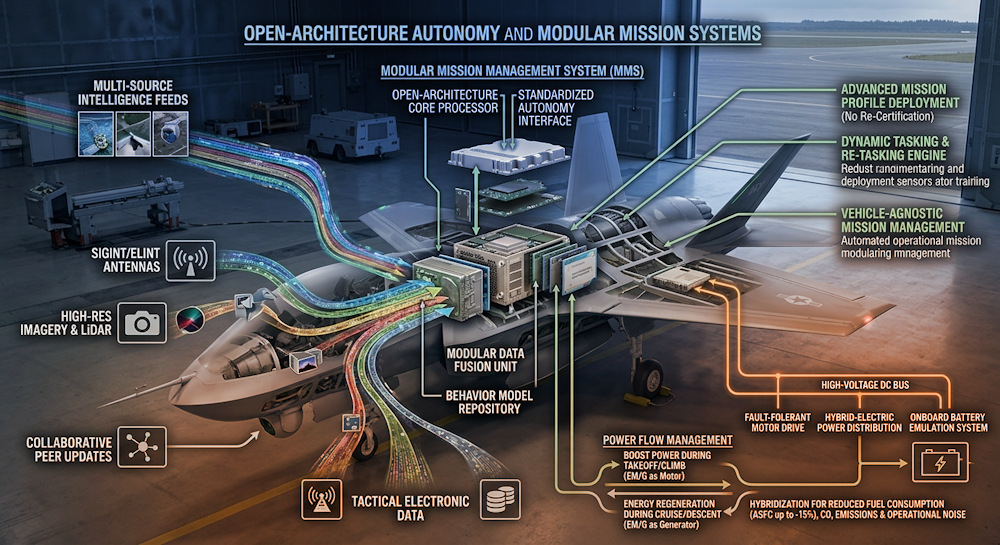
The shift toward Open-Architecture Autonomy represents a fundamental transition in uncrewed systems engineering, moving the industry away from proprietary, vendor-locked "black box" controllers toward software-defined, interoperable autonomy stacks.
Key Technical Pillars
- Modular Autonomy Stacks & Behavior Libraries: Systems utilize standardized autonomy frameworks with plug-and-play behavior modules. Mission capabilities—whether for surveillance, electronic attack, or logistics delivery—can be uploaded as software modules without hardware modification, enabling rapid role reconfiguration.
- Decoupled Perception & Planning Layers: By utilizing abstraction layers and standardized sensor APIs, perception algorithms are insulated from specific vehicle platforms. Computer vision, simultaneous localization and mapping (SLAM), and object tracking run in containerized environments, allowing algorithm updates independent of flight control software.
- Edge-Based Distributed Intelligence: Modern UAVs combine onboard multi-core processors, neuromorphic chips, and low-power AI accelerators. These units process high-resolution sensor streams locally, executing complex mission decisions without continuous reliance on ground control stations or satellite uplinks.
Recent Innovations in Open Autonomy
- Dynamic Airworthiness & Software Certification: Containerized autonomy architectures with formal verification wrappers enable updates to mission behaviors and tactics libraries without requiring full-platform recertification. Safety-critical flight controls remain isolated while mission-level autonomy evolves.
- Universal Payload Interfaces: Standardized mechanical, electrical, and data interfaces allow rapid swapping of sensor payloads, communications packages, and effector modules. Platforms can transition from ISR (Intelligence, Surveillance, Reconnaissance) to kinetic strike to cargo delivery within hours.
- Cross-Domain Interoperability: Modern autonomy stacks implement standardized messaging protocols (such as UAS Control Segment Architecture or Open Mission Systems) enabling seamless command across different manufacturers' platforms, from Group 1 small UAVs to Group 5 high-altitude systems.
Strategic & Operational Advantages
- Accelerated Capability Deployment: Traditionally, fielding new mission capabilities required hardware modifications and extensive testing. Open software frameworks allow defense forces to deploy updated tactics, threat responses, and collaborative behaviors over-the-air in operational theaters within days.
- Vendor Agnosticism & Fleet Flexibility: By adhering to open standards, operators avoid single-source dependencies. Individual subsystems—autonomy engines, radios, sensors—can be competitively sourced and integrated, lowering lifecycle costs and preventing supply chain fragility.
- Distributed Mission Execution: Rather than centralizing decision-making at ground stations, open computing platforms enable edge-based collaborative autonomy. Multiple platforms coordinate tactics, share sensor coverage, and execute synchronized maneuvers without continuous human micromanagement or high-bandwidth communications.
Resilient Command, Control & Communications (C3) in Contested Environments
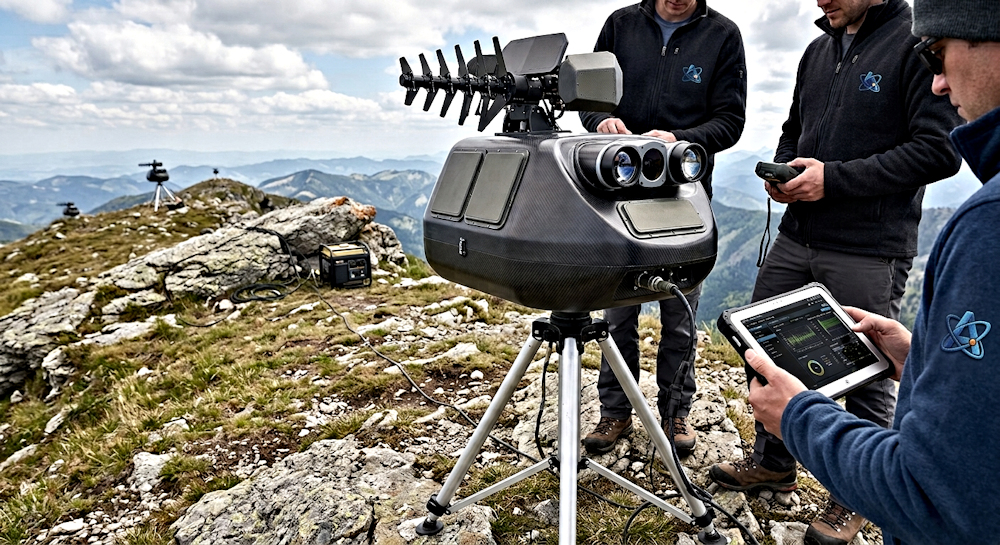
To operate effectively in electronically contested environments where communications are jammed, intercepted, or denied, advanced autonomous architectures depend on multi-path, self-healing networks. These systems combine high-bandwidth directional datalinks with store-and-forward protocols, mesh networking, and opportunistic satellite communications. Advanced network management algorithms dynamically route traffic across available pathways, maintaining command connectivity and situational awareness even when individual links are severed. On the physical layer, research into low-probability-of-intercept waveforms, cognitive radios, and free-space optical communications provides robust connectivity in high-threat electromagnetic environments.
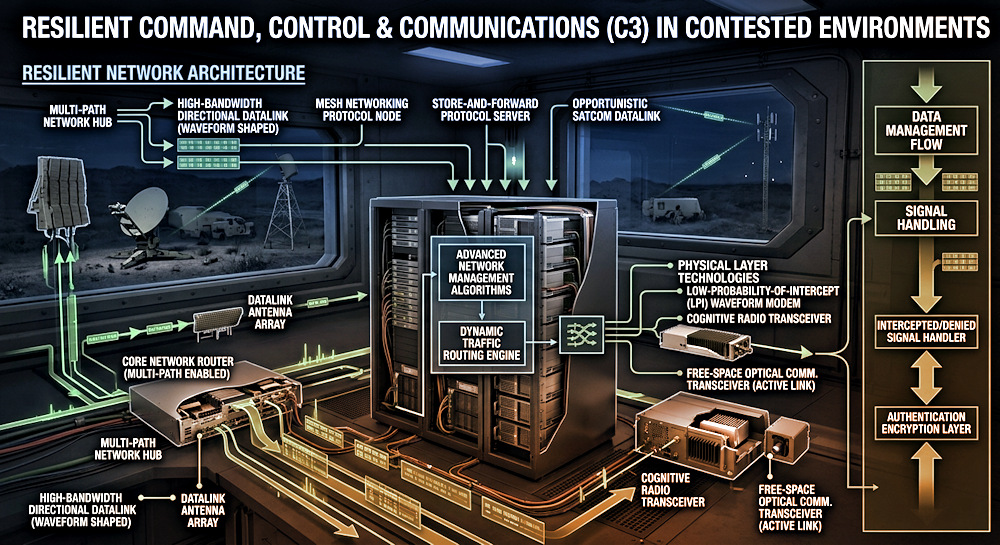
Resilient C3 represents a fundamental transition from centralized hub-and-spoke command architectures to distributed, self-organizing network topologies. By integrating intelligent routing with diverse transmission modalities, these architectures ensure continuous command authority even under heavy electronic warfare, spectrum denial, or infrastructure degradation.
Next-Generation Communications Integration
- Mesh Networking & Ad-Hoc Formation Relay: Autonomous platforms establish self-organizing mesh networks where each node serves as a relay. Dynamic routing algorithms automatically bypass jammed or destroyed nodes, maintaining connectivity across dispersed formations without fixed infrastructure.
- Cognitive Spectrum Management: Software-defined radios continuously scan the electromagnetic spectrum, identifying interference and dynamically hopping to clear frequencies. Machine learning predicts jamming patterns and preemptively shifts to alternative bands or directional beams before degradation occurs.
- Free-Space Optical Communications: High-bandwidth laser datalinks provide intercept-resistant, high-throughput connectivity between platforms and ground stations. Narrow beam divergence makes detection and jamming nearly impossible, while gigabit-class throughput supports real-time full-motion video and sensor data.
- Store-and-Forward Delay-Tolerant Networking: For beyond-line-of-sight operations in denied environments, platforms employ delay-tolerant networking protocols. Critical data is cached onboard and automatically transmitted when connectivity is restored, ensuring intelligence is never lost due to temporary link outages.
Advanced Resilience & Anti-Jam Capabilities
- Low-Probability-of-Intercept Waveforms: Advanced spread-spectrum and frequency-hopping techniques reduce electromagnetic signature. Signals appear as background noise to adversary detection systems while maintaining reliable communication between authorized nodes.
- Directional Antenna Nulling: Adaptive antenna arrays automatically detect jamming sources and electronically steer nulls in the interferer's direction while maintaining gain toward intended receivers, dramatically improving signal-to-noise ratios in contested environments.
- Autonomous Communications Degradation Recovery: When communications are severed, onboard autonomy switches to pre-planned mission profiles or consensus-based collaborative decision-making with peer platforms, continuing mission execution without ground control until connectivity is restored.
AI-Driven Mission Planning & Swarm Intelligence
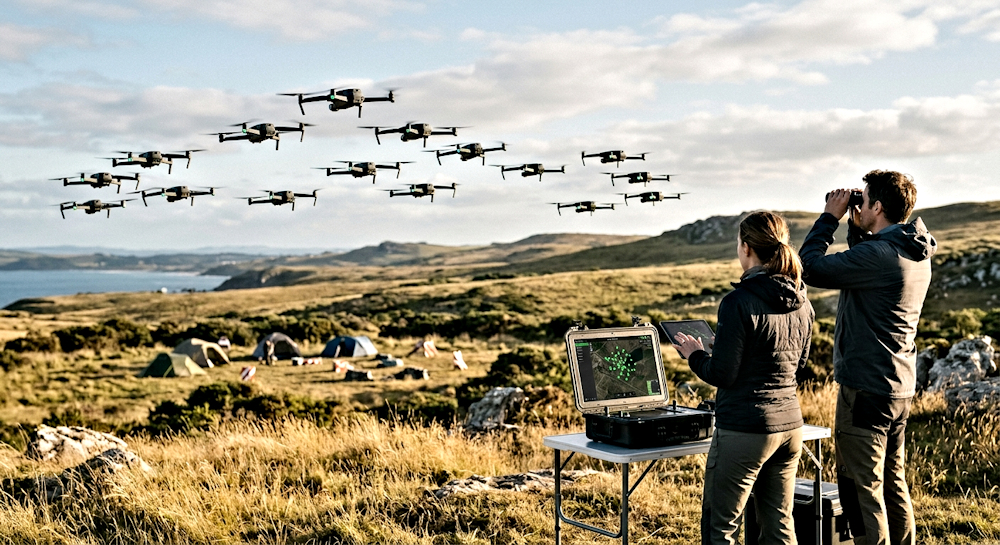
The integration of artificial intelligence, machine learning, and distributed consensus algorithms into mission planning enables real-time, adaptive task allocation and coordinated group behaviors. When operational conditions change—targets move, threats emerge, or assets are lost—these intelligent systems automatically replan routes, redistribute tasks, and optimize resource utilization across the force. Scaling beyond individual vehicles, swarm intelligence frameworks utilize emergent collective behaviors and game-theoretic optimization to manage large formations of collaborative assets in communications-degraded environments. To ensure these autonomous systems operate predictably within command intent, hierarchical control frameworks maintain human-on-the-loop oversight with adjustable autonomy levels.
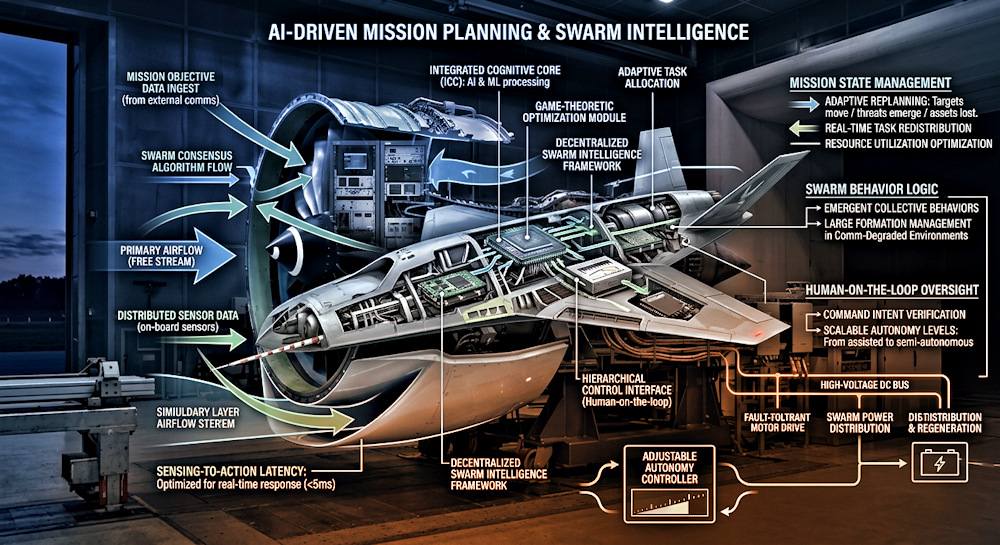
AI-Driven Mission Planning marks the operational shift from pre-programmed flight paths to dynamic, context-aware mission management. By coupling multi-agent coordination algorithms with real-time intelligence feeds, autonomous systems transition from scripted execution to adaptive, self-optimizing operational behavior.
Next-Generation Autonomous Mission Management
- Real-Time Dynamic Task Allocation: Rather than fixed mission assignments, AI-driven systems continuously evaluate platform capabilities, fuel states, sensor coverage, and threat environments to optimally assign emerging targets and intelligence requirements to the best-positioned assets.
- Predictive Threat Avoidance & Path Optimization: Machine learning models analyze historical threat patterns, terrain features, and electronic warfare signatures to predict high-risk zones. Route planning algorithms automatically generate minimum-risk paths that balance time-to-target against survivability probabilities.
- Collaborative Intelligence Fusion: Swarmed platforms autonomously share and fuse sensor observations, creating composite tracks of moving targets that exceed individual sensor capabilities. Distributed sensor networks achieve geolocation precision and identification confidence comparable to manned platforms with large standalone sensors.
Distributed Swarm Behaviors & Emergent Tactics
- Decentralized Consensus Algorithms: For large formations operating without central control, platforms utilize distributed voting and auction-based mechanisms to self-organize into optimal geometries—whether for wide-area search, barrage jamming, or saturation attacks.
- Heterogeneous Role Specialization: Mixed formations of specialized platforms (sensors, shooters, communications relays) autonomously negotiate task assignments based on real-time capability availability. If a sensor platform is lost, remaining assets dynamically assume coverage responsibilities.
- Adaptive Formation Geometries: Swarm behaviors automatically adjust formation spacing and patterns based on threat proximity, terrain masking, and mission phase—tightening for mutual protection in high-threat zones, dispersing for wide-area coverage in permissive environments.
Human-Machine Teaming & Command Frameworks
- Adjustable Autonomy Levels: Hierarchical control architectures allow operators to set autonomy levels from full remote piloting to fully autonomous execution with human-on-the-loop oversight. Commanders issue intent-based orders ("maintain surveillance on sector Alpha") while AI handles tactical implementation.
- Explainable AI Decision Logging: To maintain operational transparency, autonomous systems log decision rationale in human-interpretable formats. When AI recommends course changes or target prioritization, operators can review the factors driving recommendations before approval.
- Ethical Constraint Enforcement: Hardcoded rules of engagement and ethical boundaries operate as immutable guardrails. Regardless of mission pressure or communications loss, autonomous systems cannot violate predefined geographic, temporal, or engagement constraints without human authorization.
Extreme-Endurance Platforms & High-Altitude Operations
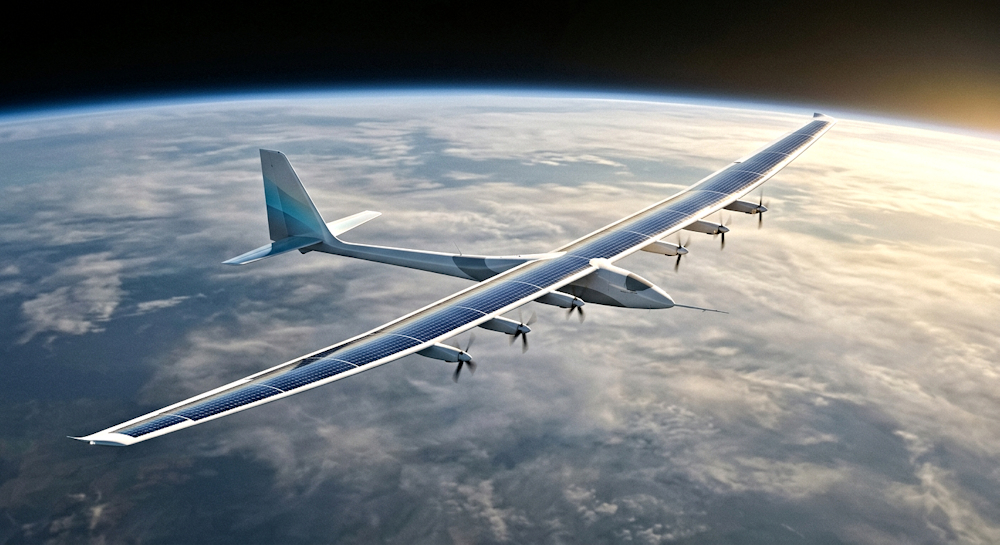
High-altitude long-endurance (HALE) and ultra-long-endurance operations—spanning weeks or months of continuous flight—demand avionics and airframes optimized for minimal power consumption, atmospheric energy harvesting, and extreme environmental resilience. Solar-electric stratospheric platforms, hydrogen fuel-cell systems, and hybrid propulsion architectures enable persistent station-keeping above commercial air traffic and weather systems. For these extreme-endurance missions, lightweight composite structures, high-efficiency propulsion, and autonomous energy management systems optimize power budgets to maintain station-keeping, sensor operations, and communications with minimal logistical footprint.
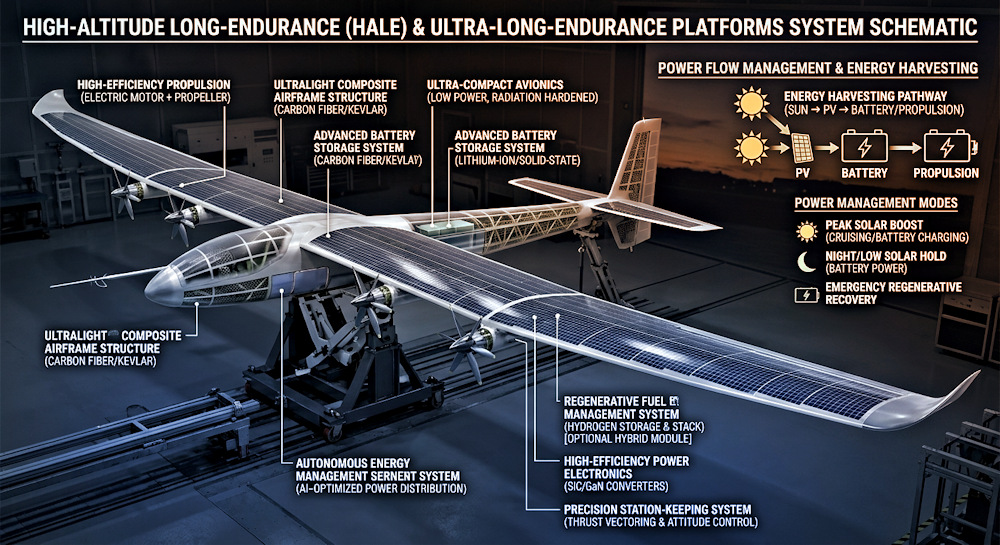
Extreme-Endurance Platforms represent the convergence of renewable energy harvesting, lightweight materials science, and autonomous operational management. Operating in the stratosphere or ultra-long-duration low-altitude orbits requires systems that self-manage energy, propulsion, and mission execution over timeframes measured in months rather than hours.
Next-Generation Persistent Platforms
- Solar-Electric Stratospheric Systems: High-altitude pseudo-satellites (HAPS) utilize expansive solar arrays and high-efficiency electric motors to achieve indefinite station-keeping at 60,000+ feet. Regenerative fuel cells store excess daytime energy for nighttime operations, enabling multi-month continuous missions.
- Hydrogen Fuel-Cell Propulsion: Liquid hydrogen fuel cells provide energy density advantages over batteries for medium-altitude long-endurance platforms. Cryogenic storage systems and fuel-cell stacks deliver clean, quiet propulsion with endurance measured in days rather than hours.
- Hybrid-Electric Optimization: Turbine-electric hybrid systems combine traditional turbine generators with battery storage and electric propulsion. Intelligent power management software switches between power sources based on mission phase—using batteries for quiet loiter, turbines for rapid transit.
Atmospheric Energy Harvesting
- Autonomous Thermal Soaring: Machine learning algorithms identify and exploit atmospheric thermals, ridge lift, and wave lift to gain altitude without power expenditure. Glider-type platforms can remain aloft indefinitely in suitable atmospheric conditions with zero fuel consumption.
- Wind Field Optimization: Real-time wind modeling and path planning allow platforms to harvest energy from wind gradients. Dynamic soaring techniques exploit vertical wind shear to maintain or gain airspeed while reducing propulsive power requirements.
Environmental Resilience & Station-Keeping
- Stratospheric Weather Adaptation: High-altitude platforms operate in extreme UV radiation, temperature differentials, and low air density. Specialized materials, radiation-hardened avionics, and low-Reynolds-number aerodynamic designs maintain performance where conventional aircraft cannot operate.
- Precision Station-Keeping Autonomy: Without continuous GPS updates, autonomous navigation systems utilize celestial navigation, terrain features, and signals-of-opportunity to maintain precise geolocation station-keeping for communications relay and persistent surveillance missions.
Airspace Integration & Regulatory Frameworks
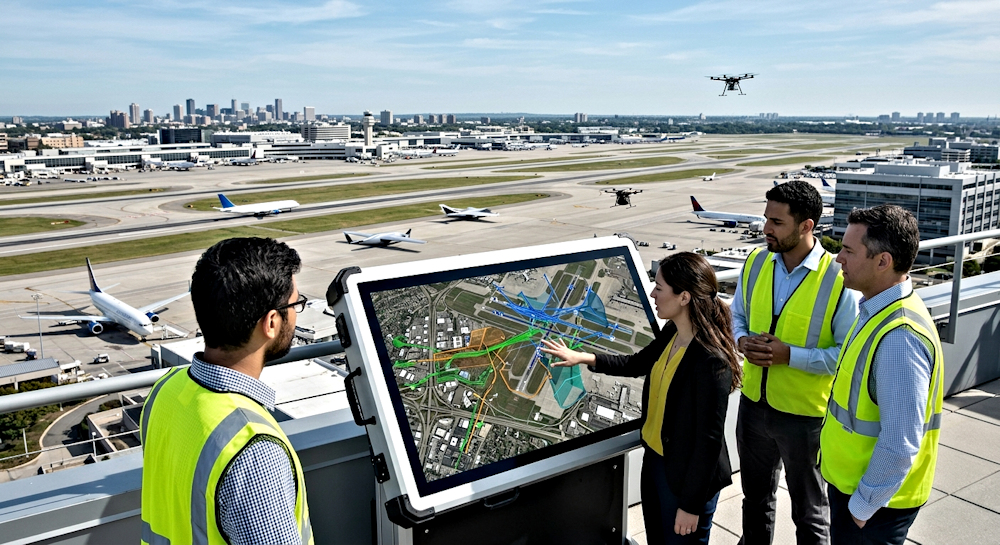
Safely integrating autonomous platforms, uncrewed aircraft systems, and advanced air mobility concepts into shared national and international airspace requires robust detect-and-avoid capabilities, standardized communications protocols, and adaptive regulatory frameworks. Next-generation airspace management systems use four-dimensional trajectory modeling and dynamic geofencing to coordinate high-density unmanned operations alongside manned aviation. By coupling onboard collision avoidance with ground-based surveillance networks and uncrewed traffic management (UTM) infrastructures, autonomous platforms can navigate complex airspace environments while maintaining compliance with evolving regulatory standards for certification, airworthiness, and operator qualification.
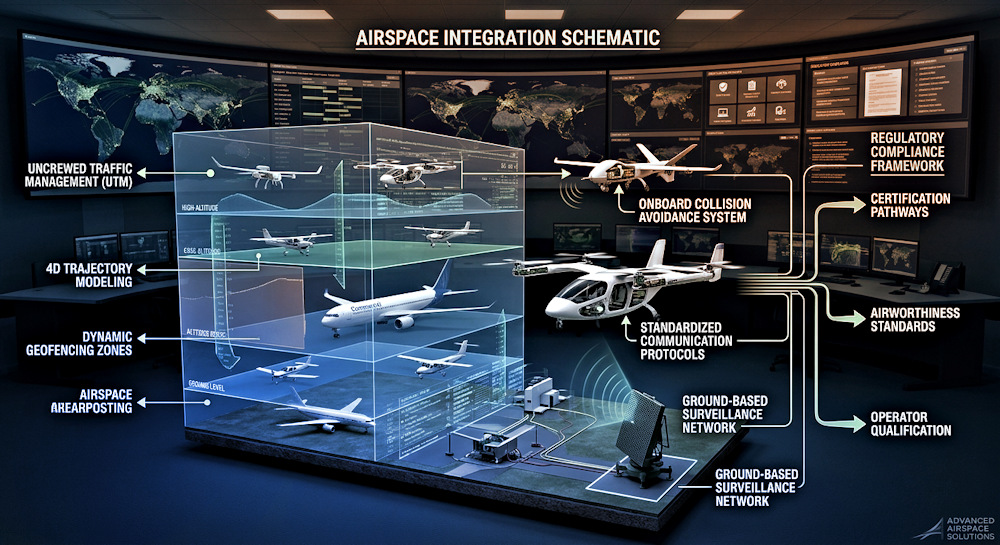
Airspace Integration and Regulatory Frameworks mark the transition from segregated unmanned operations to seamless coexistence with manned aviation in controlled airspace. Achieving routine beyond-visual-line-of-sight (BVLOS) operations requires technical capabilities, standardized procedures, and regulatory harmonization across civil and military domains.
Technical Certification & Airworthiness
- Type Certification Pathways: Regulatory frameworks are evolving from waiver-based exemptions to formal type certification standards for autonomous systems. Certification criteria address software assurance, control system redundancy, failure modes, and human-machine interface requirements comparable to manned aircraft.
- Software Assurance & Formal Verification: Autonomous flight control software undergoes rigorous formal verification, model checking, and exhaustive testing to prove deterministic behavior. DO-178C and equivalent software assurance standards ensure safety-critical code meets aviation-grade reliability requirements.
- Remote Operator Qualification: Standards for remote pilots and mission commanders are formalizing, requiring demonstrated proficiency in autonomous systems management, emergency procedures, and airspace regulations comparable to traditional pilot certifications.
Detect-and-Avoid & Sense-and-Alert Systems
- Cooperative Surveillance Integration: Autonomous platforms broadcast position, velocity, and intent via ADS-B and remote identification transponders, enabling air traffic control and other aircraft to track unmanned operations. Ground-based surveillance networks augment onboard sensors for comprehensive traffic awareness.
- Non-Cooperative Detection: Radar, electro-optical, and acoustic sensors detect aircraft not broadcasting transponder signals. Sensor fusion algorithms classify potential collision threats and trigger avoidance maneuvers compliant with right-of-way rules and operational constraints.
- Dynamic Geofencing & Airspace Boundaries: Virtual boundaries automatically enforce altitude, speed, and geographic restrictions. If platforms approach prohibited airspace or temporary flight restrictions, onboard systems automatically execute holding patterns, route deviations, or return-to-base procedures.
Uncrewed Traffic Management (UTM) Integration
- Digital Flight Authorization: UTM platforms provide automated authorization for BVLOS operations, dynamically deconflicting autonomous flight plans against manned traffic, weather, and other unmanned operations in real time.
- Strategic Deconfliction Services: Ground-based systems provide traffic alerts and strategic route adjustments before aircraft enter proximity. Predictive algorithms identify potential conflicts minutes in advance, allowing gradual course corrections rather than urgent avoidance maneuvers.
- Contingency Management Protocols: Standardized lost-link procedures, return-to-base triggers, and flight termination systems ensure predictable behavior when communications fail or emergencies occur, maintaining safety for persons and property on the ground.
Advanced Testing, Certification & Digital Twin Validation
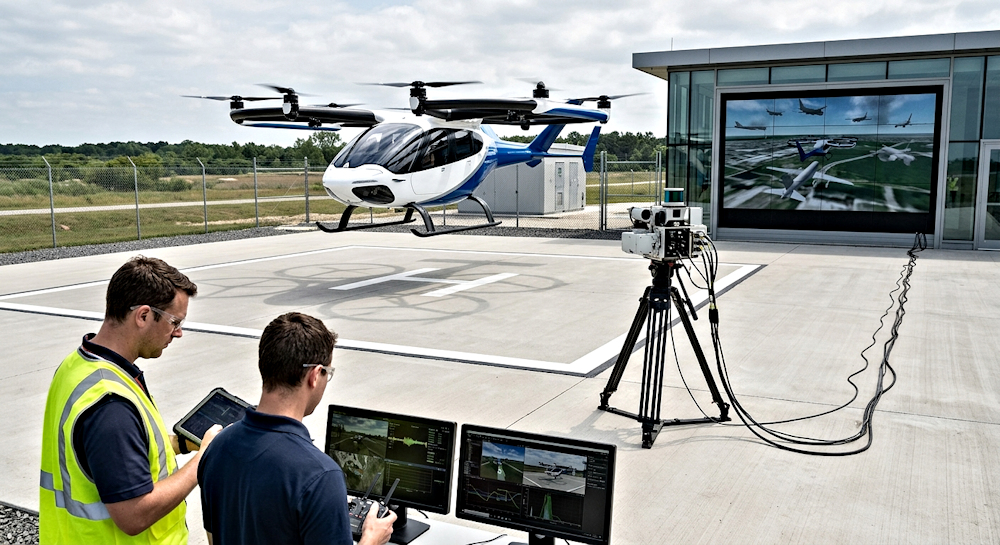
Accelerating the transition of autonomous capabilities from experimental prototypes to operationally deployed systems requires robust modeling, simulation, and validation infrastructure spanning software-in-the-loop, hardware-in-the-loop, and live flight testing. Specialized test environments integrate synthetic sensor stimulation, virtual airspace traffic, and high-fidelity physics models to validate autonomous behaviors against millions of edge cases before operational deployment. By using continuous digital twin synchronization and automated scenario fuzzing, development teams can identify failure modes, refine decision algorithms, and verify safety constraints across the full operational envelope.
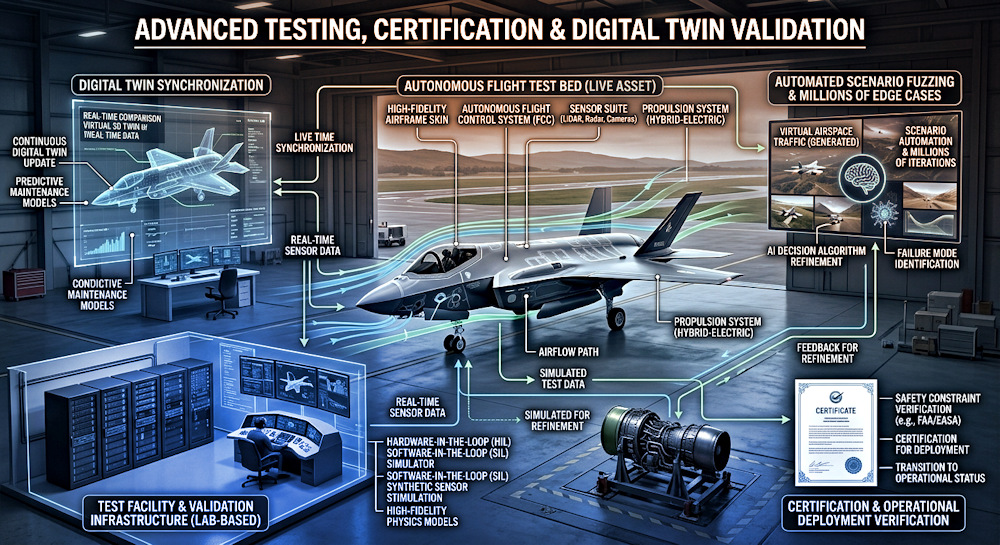
Advanced Testing and Digital Twin Validation represent the critical bridge between laboratory development and real-world autonomous operations. Modern test methodologies shift validation "to the left," discovering edge-case failures in synthetic environments while establishing certification evidence for regulatory approval.
High-Fidelity Autonomy Simulation
- Virtual Sensor Environments: Synthetic terrain databases, weather models, and electromagnetic environments stimulate onboard perception systems. Camera, radar, and signals intelligence sensors receive realistic inputs simulating operational conditions from desert heat to urban canyons to electronic warfare saturation.
- Traffic & Threat Simulation: Virtual airspace populated by synthetic manned aircraft, adversary platforms, and civilian traffic tests collision avoidance and airspace compliance algorithms. Threat emitters, jamming, and spoofing exercise resilient navigation and communications behaviors.
- Physics-Based Vehicle Modeling: High-fidelity aerodynamic, propulsion, and structural models replicate vehicle dynamics across the flight envelope. Simulators test edge cases including engine failures, control surface jams, and battle damage to verify autonomous emergency response.
Hardware-in-the-Loop & Live Testing
- Progressive Validation Pipeline: Software matures through software-in-the-loop (SITL), hardware-in-the-loop (HITL), and progressively constrained live flight testing. Each stage validates that autonomy behaves identically across synthetic and real environments.
- Shadow Mode Operations: New autonomous capabilities operate in "shadow mode" alongside human operators during live missions, logging what decisions the AI would have made without executing them. Comparative analysis validates AI recommendations against human judgment before granting execution authority.
- Certification Flight Testing: Structured flight test programs demonstrate compliance with airworthiness standards. Test cards exercise normal operations, failure modes, and emergency procedures to generate certification evidence for regulatory approval.
Continuous Digital Twin Synchronization
- Real-Time Model Calibration: Flight data continuously updates digital twin parameters—airframe performance, sensor characteristics, environmental responses—ensuring simulation fidelity matches physical platform behavior across operational life.
- Automated Edge Case Generation: AI-driven scenario generators create stress tests combining extreme weather, equipment failures, communications denial, and emergent threats. Automated testing runs millions of scenarios to discover rare failure modes and boundary conditions.
- Fleet Learning & Distributed Updates: Operational data from deployed platforms feeds centralized learning systems. Improvements validated against digital twins distribute to the fleet as certified software updates, enabling continuous capability enhancement across operational systems.