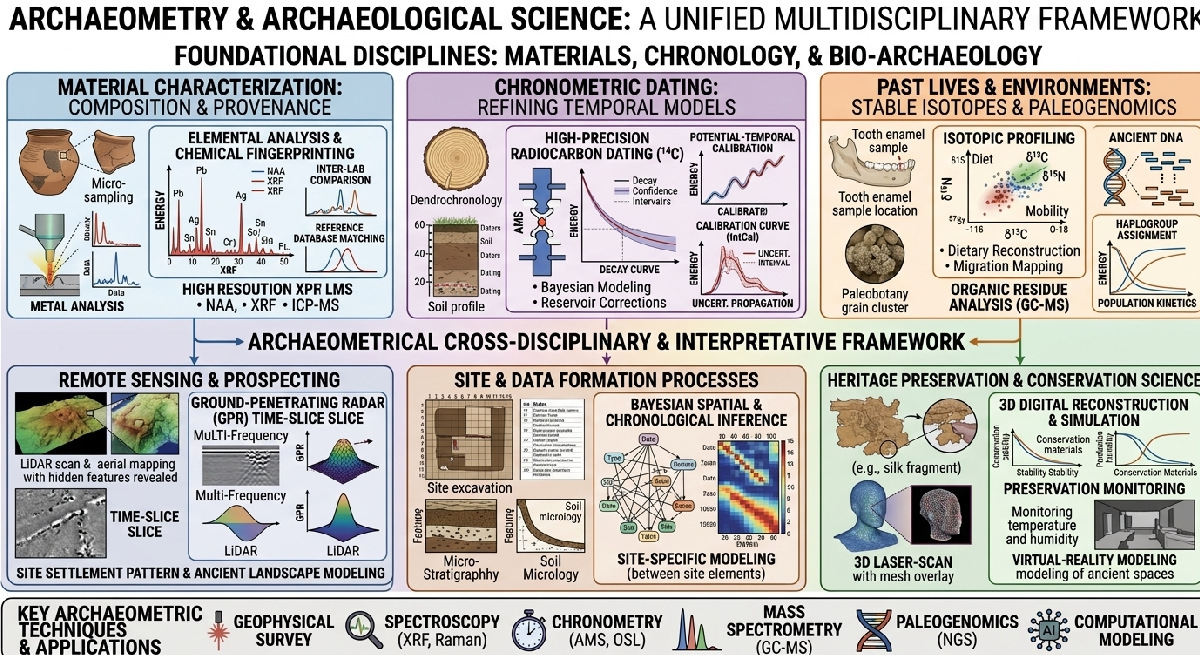
Archaeometry & Archaeological Science
Archaeometry applies scientific methods to archaeological research, extracting physical, chemical, and biological data from ancient sites and artifacts. Modern innovation integrates tools like paleogenomics, non-destructive imaging, remote sensing, and AI to analyze materials without causing damage. These developments refine dating precision, provenance tracking, and conservation to reveal deeper insights into past human behaviors.
The Martin J. Aitken Archaeometry Science Center
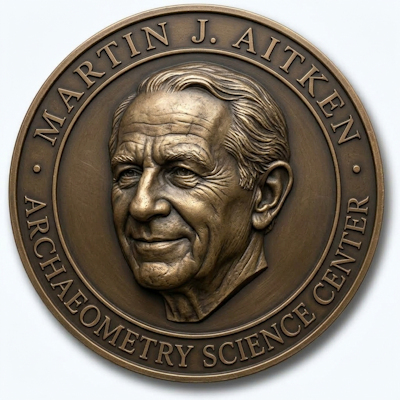 Named in honor of Martin J. Aitken, the pioneering physicist who revolutionized archaeological science through his foundational work in luminescence dating and archaeomagnetism — serves as the high-precision chronometric and physical sciences engine at Analex Laboratories. The facility integrates nuclear physics, physical chemistry, and geophysics, specializing in absolute chronometry, material composition, and high-precision physical characterization of the human past.
Core Capabilities & Equipment
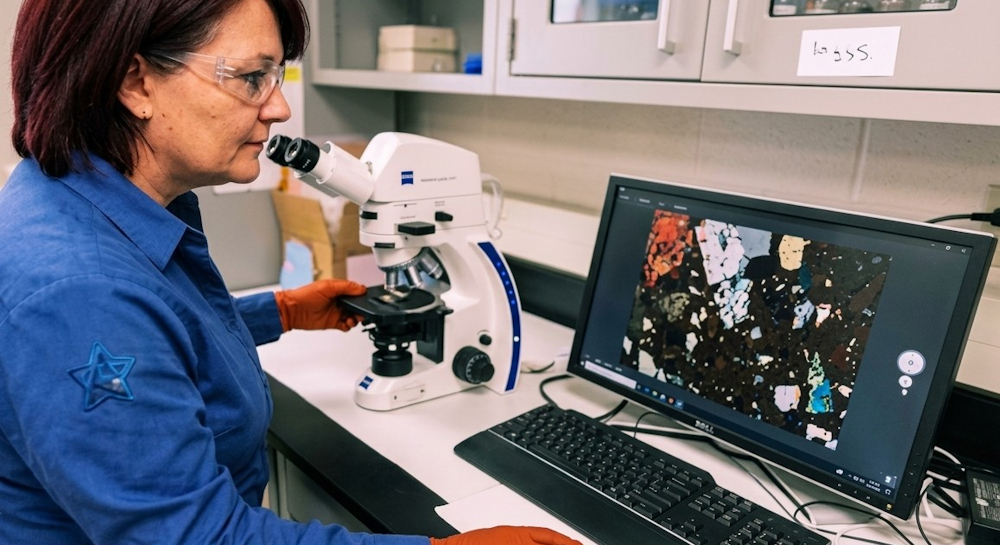
- Optically Stimulated Luminescence (OSL) & Thermoluminescence (TL) Reader Suite: High-sensitivity automated luminescence readers measure trapped electron signals in quartz and feldspar grains, providing direct burial dates for sediments, ceramics, and burnt lithics without organic preservation.
- Compact Accelerator Mass Spectrometer (AMS) Radiocarbon Unit: Low-energy carbon-14 dating spectrometers analyze milligram-scale organic samples (such as single charcoal fragments, seeds, and collagen fractions) to generate ultra-precise calendric probability distributions.
- Neutron Activation Analysis (NAA) & LA-ICP-MS Core: High-flux thermal neutron irradiation paired with laser ablation inductively coupled plasma mass spectrometry determines ultra-trace elemental compositions, building definitive material fingerprints for ceramics, metals, and stone.
- Archaeomagnetic Intensity & Directional Paleomagnetometer: Cryogenic SQUID magnetometers measure residual remanent magnetization in ancient kilns, hearths, and fired clays, cross-referencing global geomagnetic secular variation curves to establish precise firing dates.
At Analex Laboratories, our consortium is driving a transformative shift in archaeometry—the interdisciplinary bridge connecting physical sciences with human history. By blending material analysis with field techniques, research at Analex focuses on extracting granular chemical, physical, and biological signatures from fragile heritage assets. Our mandate centers on uncovering the human narrative behind raw artifacts, expanding beyond basic discovery toward understanding ancient trade networks, technological evolution, and environmental adaptations with unprecedented scientific precision.
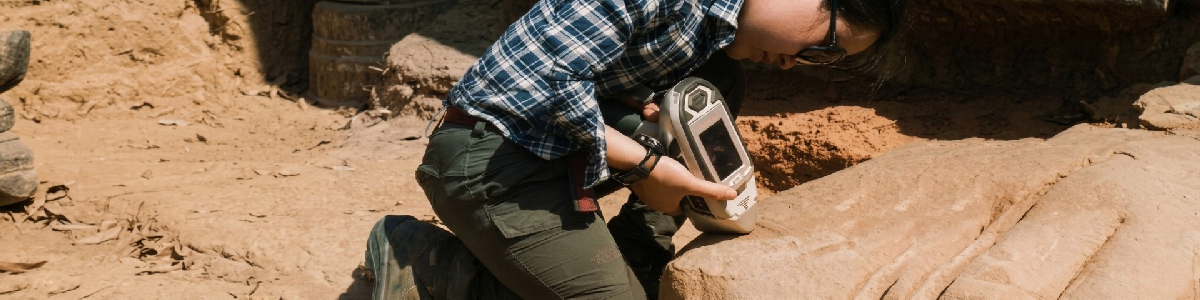
Central to our recent breakthrough developments is the deployment of hyper-sensitive, non-destructive analytical pipelines. Traditional destructive sampling is increasingly a practice of the past; Analex engineers have pioneered portable, high-throughput micro-X-ray fluorescence (µ-XRF) and hyperspectral imaging systems. These non-invasive tools allow our field teams to map raw elemental distributions and organic residue stratigraphy at a microscopic scale directly on-site, safeguarding precious cultural heritage while harvesting vast amounts of physical data in seconds.
In parallel, Analex Laboratories leads innovation in bioarchaeology and chronological refinement through advanced paleogenomics and isotope geochemistry. Our specialists extract ancient DNA (aDNA) and trace stable isotopes from micro-gram samples of bone, tooth enamel, and charred botanical remains. By synthesizing strontium, oxygen, and carbon isotopic profiles with high-resolution radiocarbon dating, our models map regional population migrations, shifts in prehistoric diet, and localized climate variations across specific lifespans with seasonal accuracy.
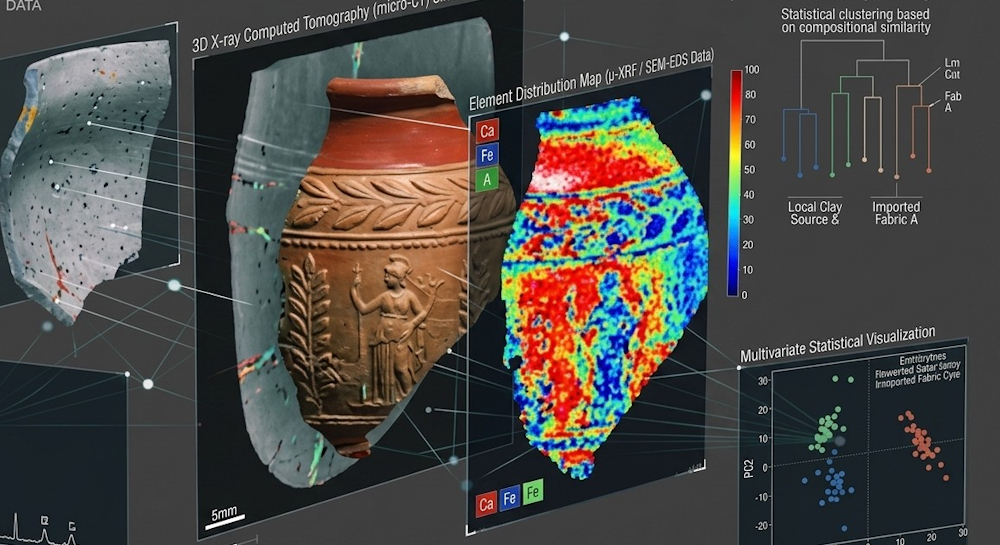
Underpinning these physical discoveries is our proprietary computational architecture, which uses specialized artificial intelligence to process complex multi-sensor data. Analex researchers deploy machine learning algorithms to evaluate airborne synthetic aperture radar (SAR) and forest-penetrating LiDAR arrays, automatically identifying buried architectural footprints and ancient agricultural terracing that remain invisible to the naked eye. Furthermore, our predictive neural networks cross-reference spectrographic data across globally distributed artifact databases, rapidly matching raw ceramic or metal samples to their exact geological origin.
Through this unified strategy of non-destructive hardware, molecular geochemistry, and AI-driven data modeling, Analex Laboratories is redefining the boundaries of archaeological science. Our continuous discoveries do not merely locate where ancient civilizations lived, but illuminate how they adapted, traded, and innovated—establishing a rigorous, empirically grounded benchmark for the global preservation and interpretation of human history.