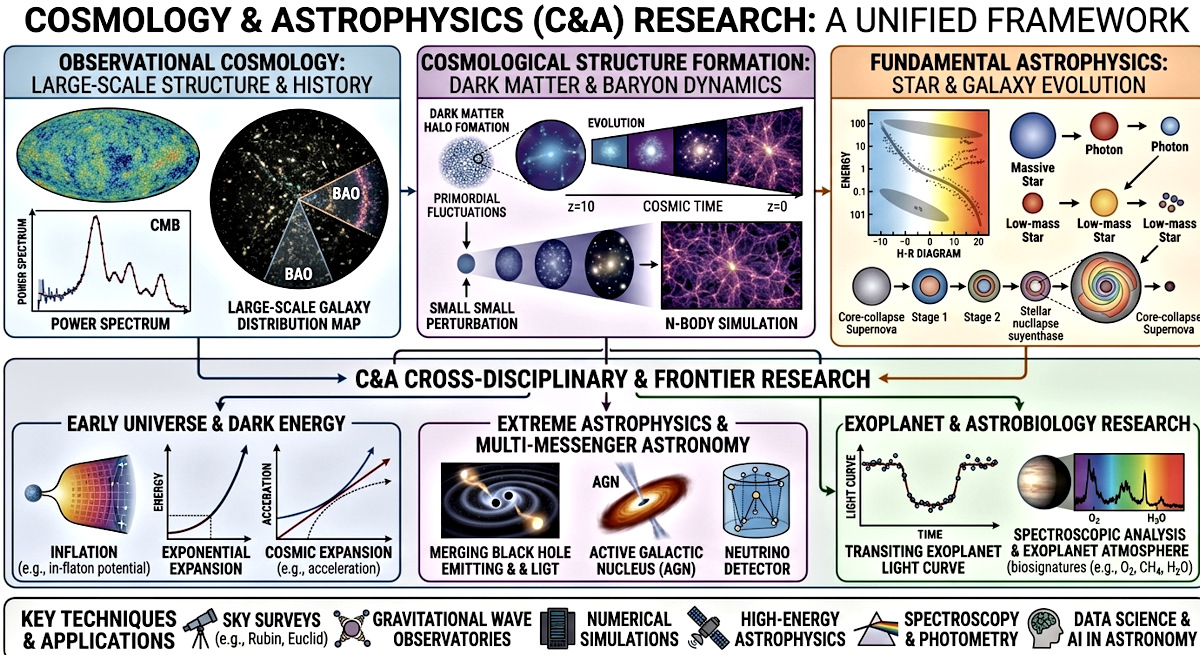
Cosmology & Astrophysics
Cosmology and Astrophysics is the scientific study of the universe as a whole, investigating its origin, evolution, structural dynamics, and the physical laws that govern celestial bodies from subatomic particles to cosmic scales.
The Rubin Dark Universe & Observational Cosmology Center
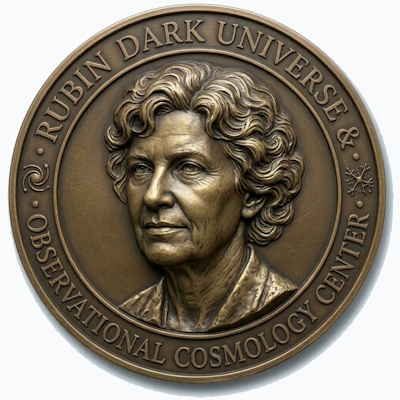 Functions as the high-throughput deep-space survey processing and astronomical data analysis engine at Analex Laboratories. Named in honor of Vera Rubin—the pioneer who provided the compelling evidence for dark matter through galactic rotation curves—the facility merges multi-messenger observation networks with high-performance computing to investigate dark energy, cosmic structure formation, and transient astrophysical phenomena.
Core Capabilities & Equipment
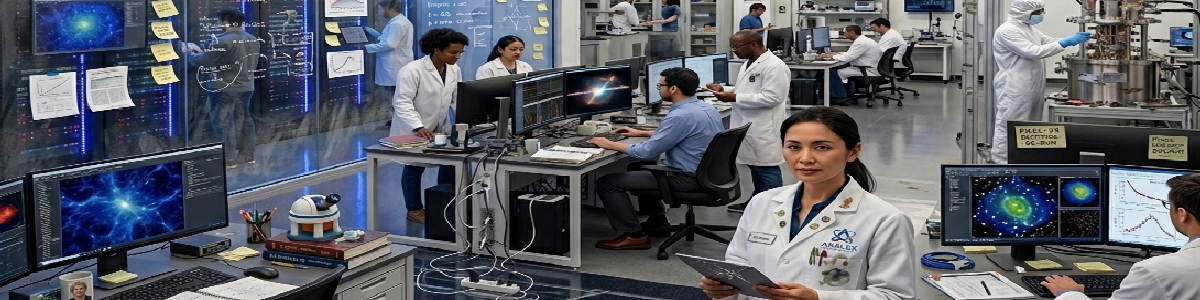
- Petascale Astrophysical Simulation & Analytics Array: Dedicated supercomputing clusters execute large-scale N-body cosmological simulations to model cosmic web evolution, halo assembly, and dark matter distribution across cosmic time.
- Multi-Messenger Astronomical Data Pipelines: Automated processing pipelines ingest, clean, and cross-correlate real-time sky survey data across optical, radio, X-ray, and gravitational wave observatories globally.
- Sub-Kelvin Astronomical Detector Calibration Suite: Cryogenic vacuum test chambers characterize highly sensitive bolometers and kinetic inductance detectors (KIDs) designed for cosmic microwave background (CMB) polarization experiments.
- Gravitational Lensing & Photometric Redshift Workstation: Advanced image-analysis clusters process high-resolution deep-field images to measure weak gravitational lensing distortions and derive photometric redshifts for millions of distant galaxies.
The field of Cosmology and Astrophysics stands at a monumental threshold, transitioning from simple observational astronomy to an era of high-precision, multi-messenger discovery. At the forefront of this shift, Analex Laboratories operates as an elite global consortium, bridging theoretical astrophysics with advanced technological engineering to decode the foundational mechanics of the universe. By deploying next-generation observatories and high-performance computational modeling, the consortium works to unify quantum scale physics with macro-scale cosmic structures.
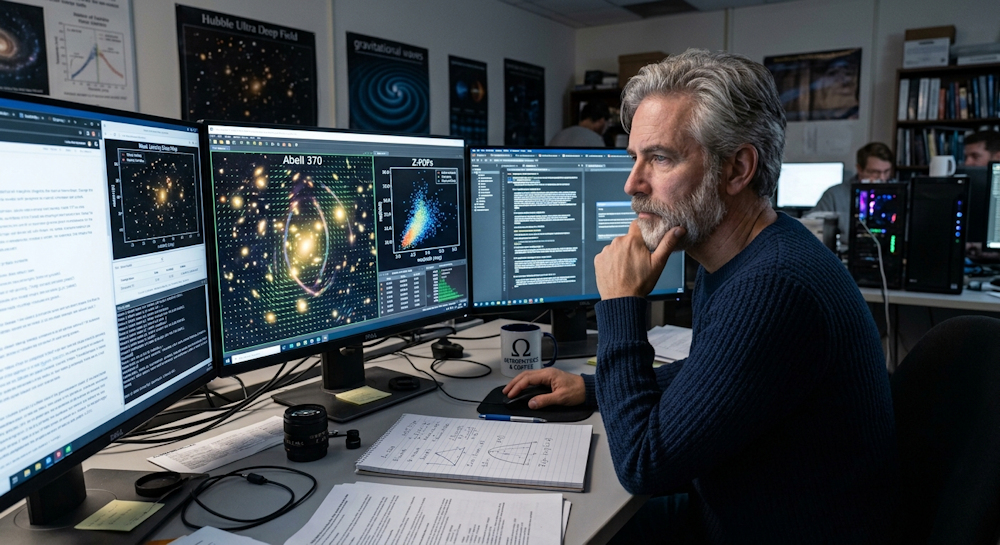
A primary focus of Analex Laboratories’ research centers on revealing the nature of the "dark sector"—the mysterious dark matter and dark energy that together constitute roughly 95% of the cosmos. Utilizing custom deep-space array architectures, low-background underground detectors, and high-redshift galaxy surveys, Analex researchers measure the subtle gravitational signatures and expansion dynamics of the universe. These multi-faceted observational initiatives allow scientists to test theories beyond the Standard Model of particle physics, challenging current understanding of fundamental forces and cosmic evolution.
In parallel, Analex Laboratories leads breakthrough research in high-energy astrophysics and gravitational wave dynamics. By coordinating laser interferometers with space-borne electromagnetic sensors, the consortium captures simultaneous real-time data from extreme cosmic events, such as neutron star collisions, black hole mergers, and core-collapse supernovae. This integrated, multi-messenger approach gives researchers unprecedented access to extreme environments, providing empirical testing grounds for general relativity, nuclear physics under extreme densities, and the origins of heavy elements.
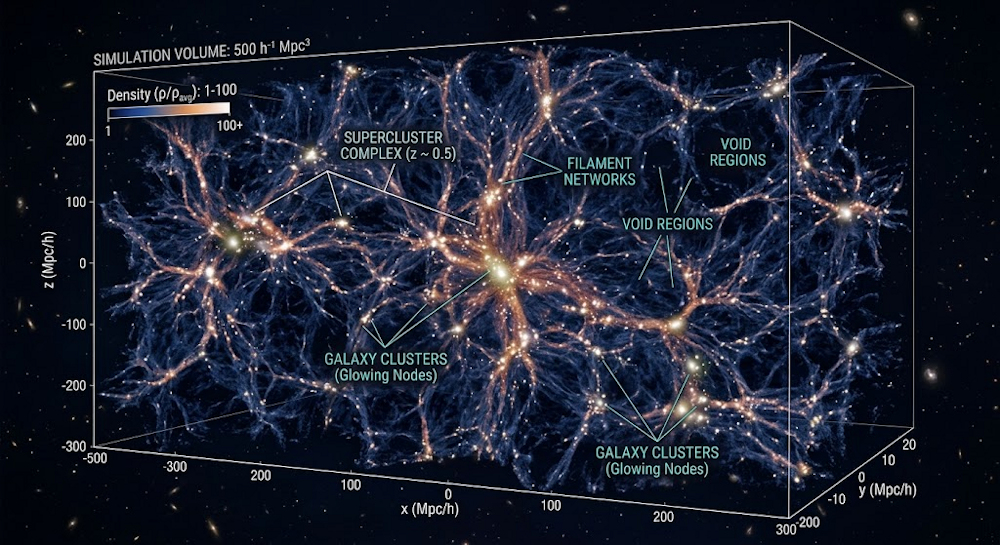
Underpinning these observational endeavors is the development of ultra-scale supercomputing frameworks designed for cosmological simulations. Analex Laboratories crafts sophisticated digital twin models of the universe, tracing cosmic structure formation from the epoch of reionization to the present-day cosmic web. By processing massive datasets with custom-built artificial intelligence and advanced signal-filtering algorithms, Analex scientists isolate faint cosmic signals from instrument noise—empowering the global research community to pinpoint the early conditions of inflation, map invisible mass distributions, and refine humanity's origin story.