Vehicle Telematics & Connected Car Systems
Located in Georgia, Analex Laboratories' 155,000-square-foot Hennon Vehicle Telematics Center provides specialized infrastructure, computational power, and testing environments to advance connected vehicle technologies and intelligent mobility systems. The facility excels in 5G integration, edge computing, cybersecurity, predictive fleet analytics, and usage-based mobility services to support end-to-end telematics solutions across vehicles, cloud networks, and infrastructure.
Hennon Vehicle Telematics Center
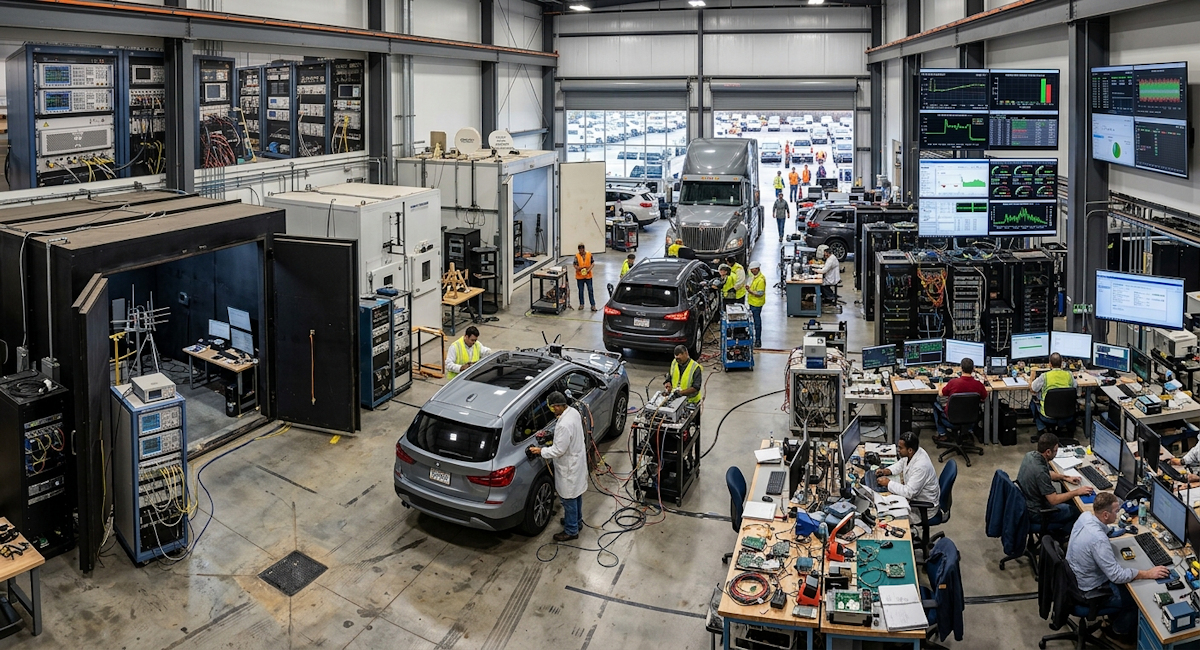
The Hennon Vehicle Telematics Center represents Analex Laboratories' dedicated facility for the advancement of connected vehicle technologies and intelligent mobility systems, strategically located in Georgia to leverage the state's growing technology ecosystem and proximity to major transportation and logistics hubs. Hennon encompasses a 155,000-square-foot purpose-built complex designed specifically for the unique requirements of telematics research, featuring specialized environments for wireless communication development, cloud-native software engineering, and comprehensive vehicle-to-infrastructure integration testing. The facility architecture reflects a deliberate spatial organization that separates radio frequency test chambers from high-performance computing laboratories while maintaining seamless connectivity between vehicle integration bays, data analytics centers, and simulation environments. Advanced infrastructure throughout the facility includes dedicated fiber connectivity, cellular network testing capabilities, and edge computing nodes that replicate real-world deployment scenarios essential for validating connected vehicle services under realistic conditions.
Hennon's core capabilities center on the development of end-to-end telematics solutions that enable seamless communication between vehicles, infrastructure, cloud services, and mobile applications, supporting a wide spectrum of connected mobility use cases from consumer convenience features through commercial fleet optimization. The facility maintains extensive computational resources featuring cloud-native development platforms, high-throughput data processing clusters, and artificial intelligence training infrastructure capable of analyzing massive datasets of vehicle telemetry, driver behavior patterns, and environmental conditions. These computational capabilities are complemented by advanced prototyping laboratories equipped with cellular communication modules, vehicle network interfaces, and embedded computing platforms that enable rapid development of telematics control units, connectivity gateways, and edge processing devices. The prototyping division specializes in producing functional telematics systems that integrate multi-mode cellular connectivity, satellite positioning, short-range wireless protocols, and vehicle bus interfaces within automotive-qualified packaging suitable for diverse deployment scenarios.
The testing infrastructure at Hennon represents a comprehensive approach to connected system validation, combining wireless communication testing, cloud service integration verification, cybersecurity assessment, and real-world vehicle deployment evaluation. The facility features multiple electromagnetic compatibility chambers and over-the-air test systems that characterize cellular modem performance, antenna radiation patterns, and coexistence behavior across diverse frequency bands including 5G, satellite, and dedicated short-range communication spectra. Network emulation platforms enable validation of telematics services under controlled connectivity conditions including variable latency, packet loss, and bandwidth constraints that replicate challenging real-world network environments. The facility maintains specialized cybersecurity laboratories equipped with penetration testing tools, protocol analyzers, and hardware security modules that identify vulnerabilities in communication protocols, authentication mechanisms, and data encryption implementations. Hennon's unique capabilities include fleet simulation environments that model thousands of simultaneously connected vehicles interacting with cloud services, enabling validation of scalability, load balancing, and service continuity under massive deployment scenarios.
Hennon's equipment portfolio encompasses state-of-the-art systems specifically configured for telematics and connected vehicle development. High-frequency spectrum analyzers and vector network analyzers characterize wireless communication performance across cellular, satellite, and vehicular communication bands with exceptional precision. Advanced positioning simulation systems generate realistic global navigation satellite system signals with controllable accuracy, multipath effects, and interference scenarios that validate location-based services under diverse conditions. The facility maintains specialized data analytics platforms featuring stream processing capabilities, machine learning inference engines, and visualization tools that transform raw vehicle telemetry into actionable insights for predictive maintenance, driver behavior analysis, and traffic optimization applications. For security validation, Hennon utilizes comprehensive test suites that verify secure boot implementations, cryptographic key management, and intrusion detection capabilities across the complete telematics ecosystem from in-vehicle devices through cloud infrastructure.
Cutting-Edge Specialties
- 5G and Next-Generation Cellular Connectivity Integration
Hennon's research teams specialize in the development of telematics systems that leverage fifth-generation cellular networks to enable ultra-reliable, low-latency communication supporting high-definition mapping, cooperative driving applications, and massive data throughput for software-defined vehicle services. This specialty addresses the integration of advanced cellular modems supporting both sub-6 gigahertz and millimeter-wave frequency bands within automotive-qualified hardware that maintains reliable connectivity across diverse geographic and environmental conditions. Engineers develop sophisticated antenna systems, radio frequency front-end architectures, and modem management software that optimize power consumption while maximizing data throughput and connection reliability during high-speed vehicle motion. The facility's testing infrastructure validates cellular performance across multiple carrier networks, characterizing handover behavior, signal quality under varying conditions, and fallback mechanisms that ensure service continuity when primary connectivity becomes unavailable.
- Edge Computing and Distributed Intelligence Architecture
The facility maintains dedicated expertise in the development of edge computing platforms that process vehicle data locally rather than transmitting everything to centralized cloud infrastructure, enabling real-time decision-making while reducing bandwidth requirements and improving response latency for time-critical applications. This specialty encompasses the design of high-performance edge devices capable of executing artificial intelligence inference, aggregating sensor data from multiple vehicle domains, and coordinating with cloud services for non-time-sensitive analytics and long-term storage. Engineers develop software frameworks that dynamically distribute computational workloads between vehicle-based edge nodes, roadside infrastructure, and cloud data centers based on latency requirements, network availability, and processing complexity. Hennon's prototyping capabilities enable fabrication of ruggedized edge computing platforms with automotive-grade thermal management, vibration resistance, and electromagnetic compatibility characteristics essential for reliable operation in challenging vehicle environments.
- Cybersecurity and Privacy-Preserving Communication
Hennon has established specialized capabilities in the development of secure communication architectures that protect vehicle data integrity, authenticate system components, and preserve user privacy while enabling the rich data exchange essential for connected mobility services. This specialty addresses the complex challenge of implementing defense-in-depth security across the complete telematics ecosystem including in-vehicle devices, wireless communication links, cloud services, and mobile applications that access vehicle information. Engineers develop hardware security modules, secure element integration, and cryptographic protocols that establish trusted execution environments, verify software authenticity, and encrypt sensitive data both in transit and at rest. The facility's security validation capabilities include penetration testing, fuzzing, and formal verification techniques that identify vulnerabilities in communication protocols, application programming interfaces, and system architectures before deployment to production environments.
- Predictive Analytics and Digital Twin Fleet Management
The facility specializes in the development of advanced analytics platforms that transform raw vehicle telemetry into predictive insights enabling proactive maintenance scheduling, optimized fleet operations, and enhanced safety monitoring across diverse vehicle populations. This specialty encompasses the creation of digital twin representations that mirror physical vehicle states, enabling simulation of component degradation, prediction of maintenance requirements, and optimization of vehicle utilization based on actual operating conditions rather than fixed schedules. Engineers develop machine learning models that analyze patterns in diagnostic trouble codes, sensor readings, and driver behavior to identify emerging issues before they result in component failures or safety incidents. Hennon's data infrastructure supports real-time processing of telemetry streams from thousands of simultaneously connected vehicles, enabling fleet operators to monitor asset health, optimize routing, and improve operational efficiency through data-driven decision-making.
- Usage-Based Services and Mobility Ecosystem Integration
Hennon maintains specialized expertise in the development of usage-based service platforms that leverage connected vehicle data to enable innovative business models including pay-per-mile insurance, shared mobility services, and personalized driver assistance applications that adapt to individual behavior patterns. This specialty addresses the integration of telematics systems with external service providers, enabling secure data exchange that supports usage-based insurance rating, automated claims processing, and driver coaching applications while maintaining strict privacy controls and regulatory compliance. Engineers develop consent management frameworks, data anonymization techniques, and application programming interfaces that enable third-party service integration while ensuring vehicle owners retain control over their personal information. The facility's testing capabilities validate end-to-end service workflows including automated first notice of loss for insurance applications, real-time driver scoring algorithms, and seamless integration with mobile applications that deliver personalized mobility experiences based on connected vehicle data.