Developmental Biology
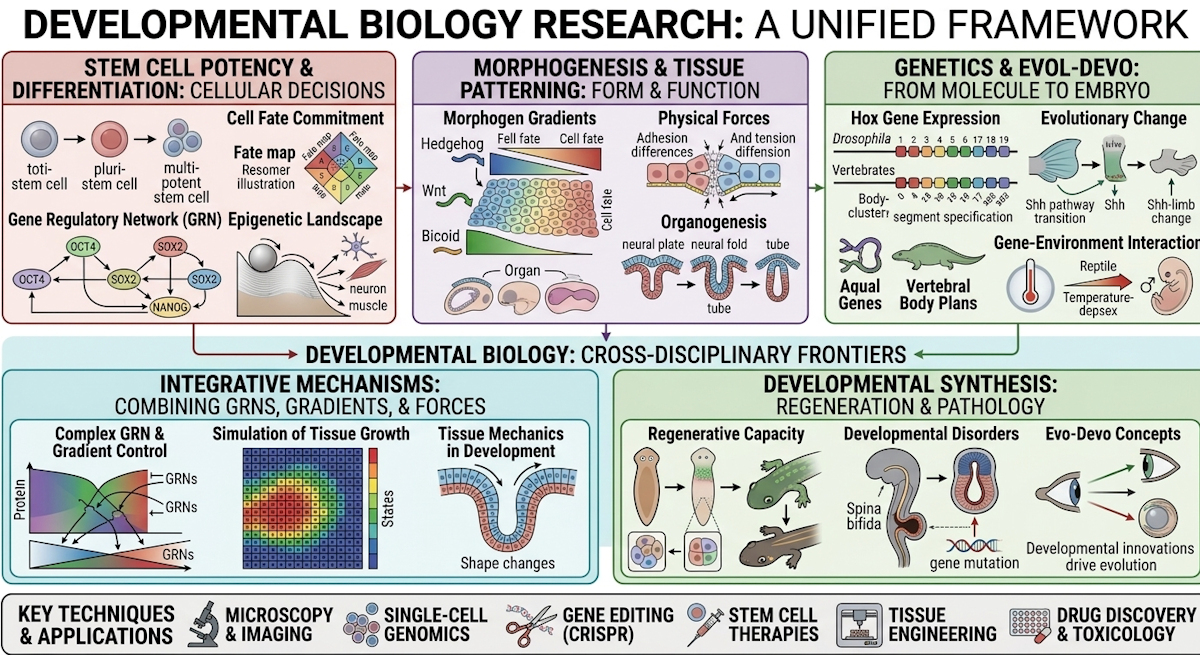
Developmental biology explores the genetic, molecular, and cellular mechanisms that transform a single cell into a complex organism. Advanced tools like single-cell sequencing, live-cell imaging, and CRISPR enable real-time tracking of cell lineage and tissue formation. These breakthroughs advance core biological insights while accelerating stem cell and regenerative therapies.
The Spemann-Mangold Morphogenesis & Embryology Center
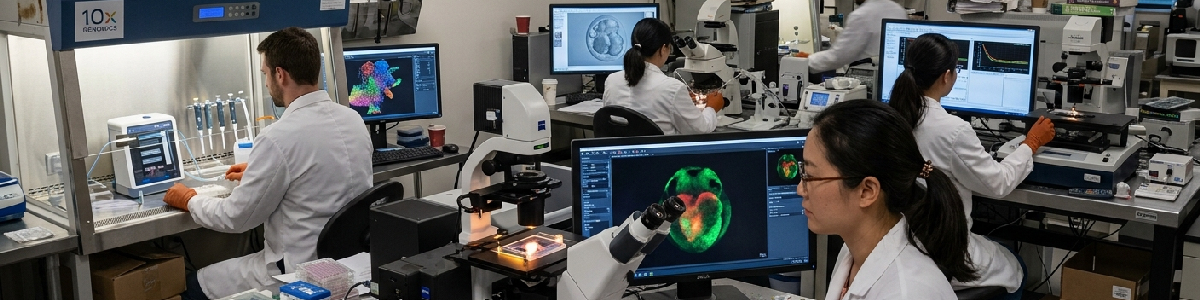
Serves as the high-precision organogenesis and lineage-tracing hub at Analex Laboratories. Named in honor of Hans Spemann and Hilde Mangold—the visionary researchers who discovered the embryonic organizer and unlocked the mechanisms of tissue induction—the facility integrates live-cell bioimaging with spatial transcriptomics to decipher cell fate determination, body pattern formation, and structural regeneration across developing organisms.Core Capabilities & Equipment
- Light-Sheet Volumetric Live-Imaging Suite: High-speed, low-phototoxicity microscopes record four-dimensional cell migration and tissue folding in real time across intact, transparent embryos.
- Spatial Transcriptomics & Single-Cell Fate Mapping Array: Single-cell microfluidic platforms sequence RNA profiles within intact embryonic tissues, tracing precise cell lineages and signaling gradients during organ formation.
- Laser Microdissection & Micromanipulation Station: Ultra-precise ultraviolet laser cutting and micro-injection tools enable targeted tissue transplantation, cellular ablation, and localized gene delivery in early-stage embryos.
- Morphogen Kinetics & Biomechanical Profiling Workstation: Atomic force microscopy and optical tweezers measure physical force generation, tissue stiffness, and signaling molecule diffusion to map the physical forces driving morphogenesis.
At Analex Laboratories, our developmental biology research program is dedicated to uncovering the fundamental rules that govern life’s creation. By integrating molecular genetics, cellular dynamics, and computational modeling, our consortium maps the precise cascade of events that transforms a single fertilized egg into a fully realized, complex organism. Our interdisciplinary teams seek to decode the underlying biological programs that dictate how cells communicate, specialize, and self-organize across space and time.
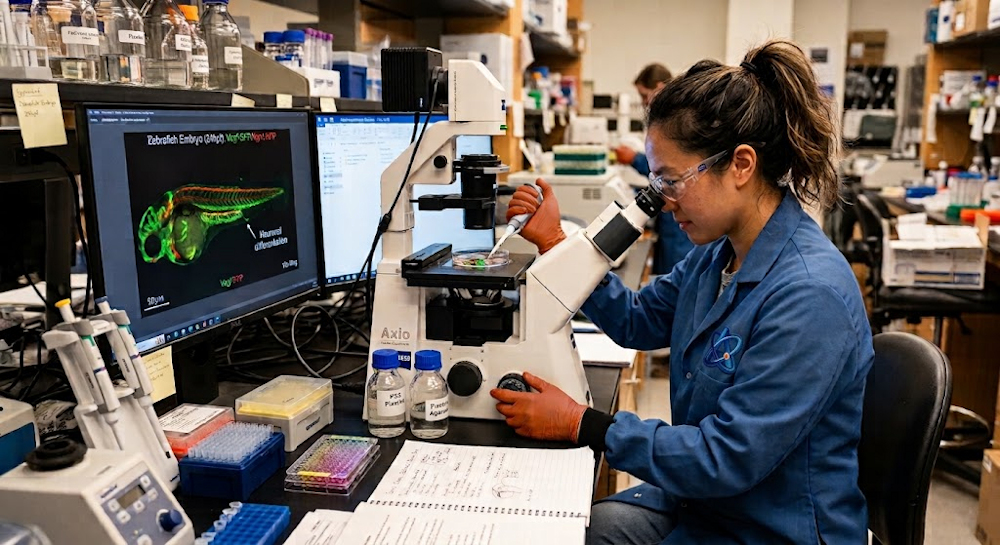
To achieve these breakthroughs, Analex Laboratories pioneers high-resolution technologies that make the invisible visible. Utilizing real-time live-cell imaging, multi-omics sequencing at single-cell resolution, and precise CRISPR genome editing, our researchers track cell lineages and gene expression patterns in living tissue. These capabilities allow us to construct dynamic four-dimensional maps of embryogenesis, revealing how subtle biochemical signals steer unspecialized stem cells toward becoming specific structures like neural networks or vascular pathways.
A central focus of our program is tissue morphogenesis—the physical process by which sheets of cells fold, migrate, and build complex three-dimensional organs. Analex researchers combine biomechanical force measurements with predictive computational models to determine how physical stresses interact with biochemical signaling to shape developing tissues. By understanding how organs establish their symmetry, size, and architectural boundaries, we are uncovering the structural blueprints essential for healthy animal and human development.
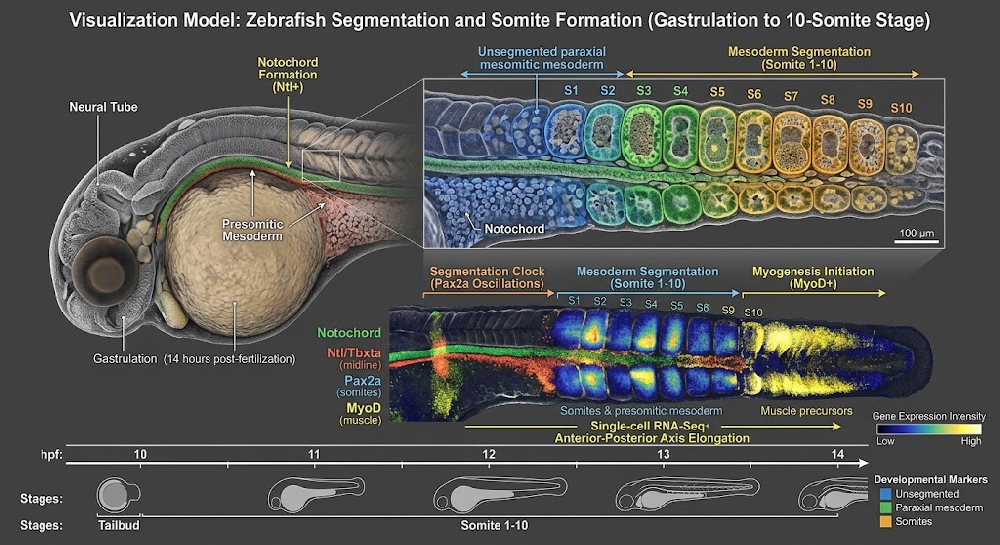
These foundational discoveries directly fuel Analex Laboratories' applied initiatives in regenerative medicine and clinical health. By reverse-engineering natural developmental pathways, our scientists develop novel protocols to direct human stem cells into functional organoids that replicate human tissue structure and function. These bioengineered tissue models serve as powerful platforms for modeling early human development, testing target therapeutics, and screening for environmental toxins, accelerating the path toward organ repair and replacement therapies.
Ultimately, our research bridges the gap between fundamental biological discovery and clinical application. By deciphering how developmental processes are controlled—and why they occasionally fail—Analex Laboratories is revealing the root causes of congenital anomalies, childhood diseases, and tissue degeneration. Through our collaborative consortium model, we continue to push the boundaries of developmental biology, unlocking cellular mechanisms that promise to transform future medicine.