Carbon Capture, Utilization, & Storage
Located in Wyoming, the Ayers Carbon Utilization Center at Analex Laboratories is a premier research facility focused on early-stage design, testing, and validation of carbon capture, utilization, and storage technologies. Through its specialized laboratories, advanced testing equipment, and comprehensive development methodology, the center accelerates cost-effective innovations to enable industrial decarbonization and commercial carbon management solutions.
Ayers Carbon Utilization Center
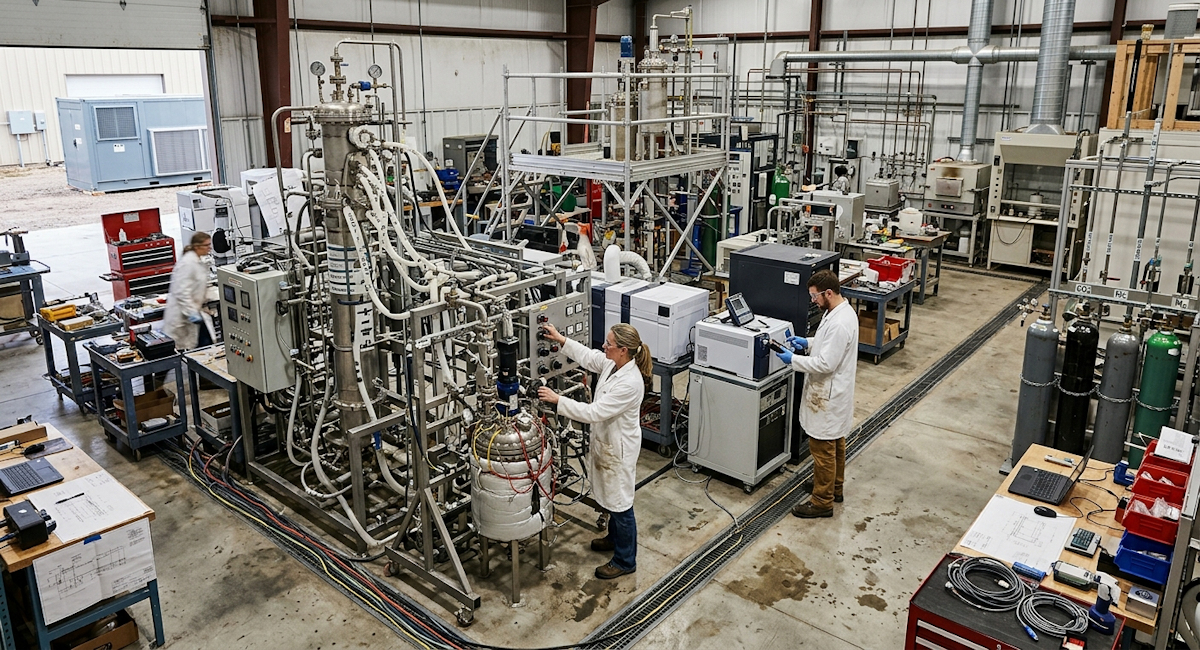
At Analex Laboratories, the Ayers Carbon Utilization Center stands as a premier research and development facility dedicated to advancing the technologies necessary for capturing atmospheric carbon dioxide and converting it into valuable products or storing it safely underground. Located in Wyoming, Ayers serves as a critical hub for the design, engineering, testing, and prototyping of carbon capture, utilization, and storage systems. The facility focuses exclusively on front-end development activities, providing the technical innovation and validation necessary for commercial partners to deploy carbon management solutions at scale. By concentrating on early-stage research and demonstration, Ayers accelerates the development of cost-effective technologies that will enable industrial decarbonization, direct air capture, and the creation of a circular carbon economy.
The physical campus of Ayers encompasses a comprehensive complex engineered specifically for carbon management research. The main research building features high-bay laboratory spaces with specialized ventilation and gas handling systems for working with carbon dioxide at various concentrations and pressures. The facility includes a dedicated carbon capture laboratory with pilot-scale absorption columns, adsorption beds, and membrane testing modules capable of processing simulated flue gas and ambient air streams. A specialized materials synthesis wing houses high-temperature furnaces, autoclaves, and chemical reactors for developing solid sorbents and catalysts. The campus features a geological testing laboratory with high-pressure core flooding apparatus, rock mechanics equipment, and fluid analysis systems for evaluating subsurface storage potential. An outdoor testing area accommodates containerized pilot units for extended field testing of capture systems under real atmospheric conditions. Supporting these technical spaces are analytical laboratories with gas chromatographs, mass spectrometers, and infrared spectrometers for precise gas analysis, along with computational modeling centers and collaborative engineering offices.
Ayers maintains an extensive inventory of specialized equipment essential for carbon capture, utilization, and storage research. The capture systems laboratory operates pilot-scale absorption units with structured packing and spray columns for testing liquid solvents, along with fixed-bed and fluidized-bed reactors for evaluating solid sorbents under temperature swing and pressure swing conditions. The direct air capture testing area features modular contactor units with large surface area configurations, blower systems for moving ambient air, and thermal regeneration equipment for desorbing captured carbon dioxide. The materials characterization division houses surface area analyzers, pore size distribution measurement systems, and thermal gravimetric analyzers coupled with mass spectrometry for studying sorbent properties and degradation mechanisms. The geological laboratory maintains high-pressure core flooding systems for simulating subsurface injection conditions, triaxial compression frames for rock mechanics testing, and micromodel flow visualization systems for studying multiphase flow in porous media. The utilization research area features high-pressure catalytic reactors, electrochemical cells for carbon dioxide reduction, and mineralization testing apparatus for producing carbonated building materials. Computational resources include reservoir simulation software, process modeling tools, and molecular dynamics packages for materials design.
The operational methodology at Ayers follows a comprehensive development cycle that advances carbon management technologies from initial concept through pilot-scale validation. Research teams begin with materials synthesis and screening, utilizing high-throughput methods to identify promising sorbents, solvents, and catalysts. Component-level testing evaluates mass transfer performance, energy consumption, and durability under realistic operating conditions. System integration combines unit operations into cohesive pilot plants capable of continuous operation for extended periods. Geological characterization activities analyze rock core samples for storage potential, evaluate cap rock integrity, and model carbon dioxide plume migration. Utilization research transforms captured carbon into valuable products through chemical, electrochemical, and mineralization pathways. Throughout this process, rigorous monitoring protocols track carbon dioxide fate and ensure accurate accounting for verification and certification purposes.
Cutting-Edge Specialties
- Point-Source Carbon Capture Systems
Ayers maintains a leading research program focused on technologies that capture carbon dioxide from industrial emissions before they enter the atmosphere. Engineers develop advanced amine-based absorption systems with improved solvents that reduce regeneration energy requirements and minimize degradation, solid sorbent systems using temperature swing or pressure swing regeneration, and membrane separation technologies for specific industrial applications. The program encompasses process intensification strategies including novel contactor designs, heat integration schemes, and modular system architectures that enable deployment across diverse industrial facilities. Testing protocols evaluate carbon dioxide capture rates, energy consumption per ton captured, solvent or sorbent stability over thousands of cycles, and system response to variable inlet conditions. The research addresses cost reduction through materials optimization, equipment standardization, and operational efficiency improvements. This specialty supports the development of capture systems suitable for deployment at power plants, cement facilities, steel mills, and chemical manufacturing sites.
- Direct Air Capture Technology Development
The facility operates a dedicated division for developing systems that remove carbon dioxide directly from ambient air, enabling capture from distributed sources and historical emissions. Researchers investigate solid sorbent systems using amine-functionalized materials, metal-organic frameworks, and alkaline earth metal oxides that selectively adsorb carbon dioxide at atmospheric concentrations. The program encompasses contactor design for maximizing air throughput and sorbent exposure, thermal management systems for efficient regeneration, and integration strategies for coupling with renewable energy sources. Testing facilities evaluate carbon dioxide uptake capacity under varying humidity and temperature conditions, regeneration energy requirements, and sorbent lifetime through accelerated aging protocols. The research addresses cost reduction targets necessary for large-scale deployment, including modular system designs, automated operation, and optimized energy integration. This specialty supports the development of negative emissions technologies essential for achieving climate goals.
- Geological Carbon Storage and Monitoring
Ayers conducts intensive research into the safe and permanent storage of carbon dioxide in deep geological formations including saline aquifers, depleted oil and gas reservoirs, and unmineable coal seams. Engineers develop injection strategies that optimize storage capacity and minimize risk, modeling techniques that predict carbon dioxide plume migration and pressure buildup, and monitoring systems that track stored carbon over time. The program encompasses geochemical analysis of formation fluids and rocks, geomechanical evaluation of cap rock integrity, and seismic monitoring techniques for detecting carbon dioxide movement. Testing utilizes high-pressure core flooding apparatus to evaluate injectivity and storage capacity, along with numerical simulation tools for site characterization and risk assessment. The research addresses regulatory requirements for storage site permitting, long-term liability frameworks, and verification protocols for carbon accounting. This specialty supports the development of secure geological storage essential for carbon capture and storage deployment at scale.
- Carbon Utilization in Building Materials
The facility maintains an active program developing technologies that convert captured carbon dioxide into construction materials through mineralization reactions. Researchers investigate processes that carbonate industrial waste materials including steel slag, coal ash, and concrete demolition debris to produce supplementary cementitious materials and aggregates. The program encompasses direct carbonation of fresh concrete during mixing and curing, accelerated mineralization of alkaline waste streams, and production of precipitated calcium carbonate for various applications. Testing facilities include high-pressure carbonation reactors, concrete mixing and curing chambers with controlled carbon dioxide atmospheres, and mechanical testing equipment for evaluating product performance. The research addresses product quality standards, durability characteristics, and lifecycle assessment of carbon-negative building materials. This specialty supports the development of utilization pathways that provide economic value while permanently sequestering carbon in long-lived products.
- Carbon-to-Chemicals and Fuel Synthesis
Ayers engineers catalytic and electrochemical systems that convert captured carbon dioxide into valuable chemicals, fuels, and industrial feedstocks. The research focuses on thermochemical processes producing methanol, formic acid, and synthetic hydrocarbons through hydrogenation reactions, electrochemical reduction generating carbon monoxide and multi-carbon products, and biological conversion pathways using engineered microorganisms. The program encompasses catalyst development for selective carbon-carbon bond formation, reactor design for optimizing conversion and selectivity, and process integration strategies combining carbon capture with utilization. Testing facilities include high-pressure catalytic reactors, electrochemical cells with various electrode configurations, and product separation and purification equipment. The research addresses energy integration with renewable hydrogen production, economic viability compared to fossil-derived products, and lifecycle environmental impacts. This specialty supports the development of circular carbon economy pathways that transform waste carbon dioxide into valuable products while reducing dependence on fossil fuel feedstocks.