Thermal & Fossil Fuel Technology
Located in West Virginia, Analex Laboratories' McBride Fossil Fuel Center is a premier research facility focused on early-stage design, testing, and validation of clean coal and advanced thermal power technologies. Its comprehensive campus features high-bay laboratories, pilot-scale combustion and materials testing equipment, and computational modeling centers that systematically advance high-efficiency, low-emission energy systems toward commercial deployment.
McBride Fossil Fuel Center
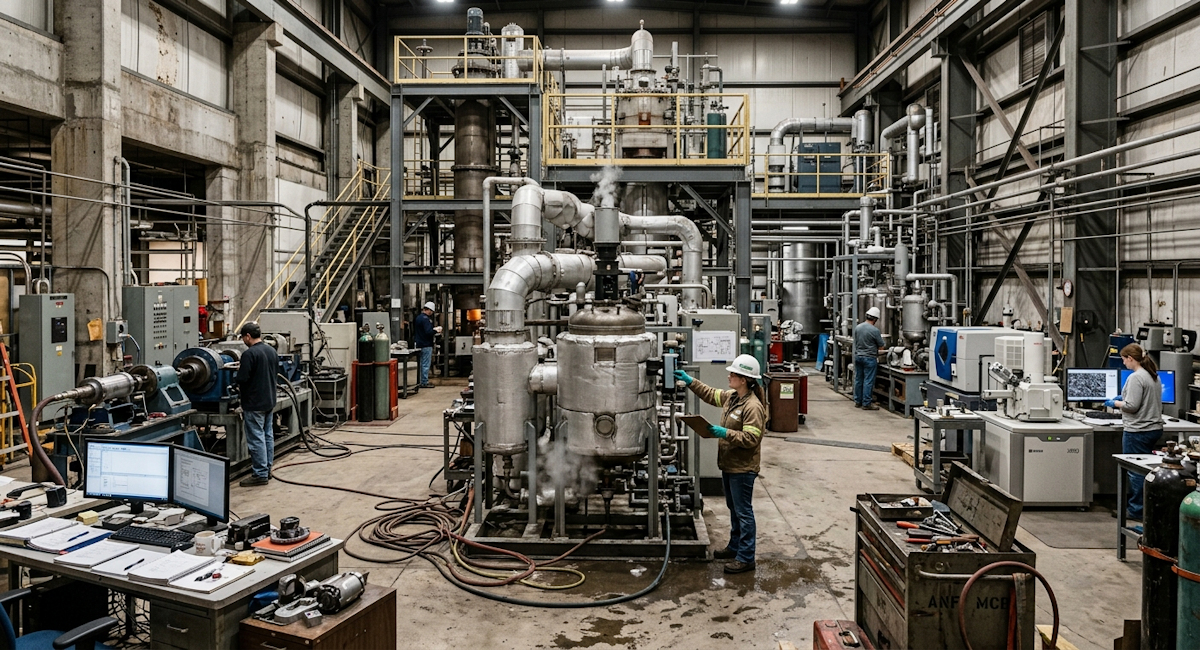
At Analex Laboratories, the McBride Fossil Fuel Center stands as a premier research and development facility dedicated to advancing technologies that maximize the efficiency and minimize the environmental impact of fossil fuel power generation. Located in West Virginia, McBride serves as a critical hub for the design, engineering, testing, and prototyping of advanced thermal power systems, clean coal technologies, and emissions control solutions. The facility focuses exclusively on front-end development activities, providing the technical innovation and validation necessary for commercial partners to deploy next-generation fossil fuel technologies that achieve higher efficiencies, lower emissions, and potential for carbon capture integration. By concentrating on early-stage research and demonstration, McBride supports the responsible utilization of fossil fuel resources while advancing the transition toward cleaner energy systems.
The physical campus of McBride encompasses a comprehensive complex engineered specifically for thermal power research and development. The main research building features high-bay laboratory spaces with reinforced structural elements capable of supporting heavy pressure vessels and combustion equipment. The facility includes a dedicated combustion laboratory with pilot-scale furnace systems, gasification reactors, and chemical looping test units for evaluating advanced combustion concepts. A specialized turbomachinery laboratory houses high-speed rotating equipment test stands, bearing development stations, and aerodynamic testing capabilities. The campus features a materials testing wing with high-temperature furnaces, creep testing equipment, and corrosion evaluation chambers for qualifying materials under extreme thermal and chemical conditions. An outdoor testing area accommodates containerized pilot plants, emissions monitoring equipment, and large-scale component validation systems. Supporting these technical spaces are analytical laboratories with gas chromatographs, mass spectrometers, and continuous emissions monitoring systems, along with computational modeling centers and collaborative engineering offices equipped with advanced simulation software.
McBride maintains an extensive inventory of specialized equipment essential for thermal and fossil fuel technology research. The combustion laboratory operates pressurized fluidized bed reactors, entrained flow gasifiers, and chemical looping combustion systems with integrated solids handling and gas analysis capabilities. The steam cycle research area features high-pressure pump testing stations, heat exchanger test modules, and supercritical fluid testing loops capable of operating at temperatures exceeding six hundred degrees Celsius and pressures above twenty-five megapascals. The turbomachinery laboratory maintains high-speed spin test rigs, blade vibration measurement systems, and aerodynamic flow visualization equipment. The emissions control testing area includes electrostatic precipitator pilot units, fabric filter baghouse test systems, selective catalytic reduction reactors, and activated carbon injection equipment for mercury control evaluation. The facility includes supercritical carbon dioxide test loops with compressors, heat exchangers, and turbine expanders for evaluating advanced power cycles. Materials characterization equipment includes scanning electron microscopes, X-ray diffraction systems, and mechanical testing frames for evaluating high-temperature alloys and coatings. Computational resources include computational fluid dynamics software, process simulation platforms, and finite element analysis tools for component design.
The operational methodology at McBride follows a systematic development cycle that advances thermal power technologies from conceptual design through pilot-scale validation. Research teams begin with computational modeling and simulation to optimize thermodynamic cycles, combustion processes, and component designs before physical construction. Materials development progresses through synthesis, characterization, and high-temperature testing to validate performance under realistic operating conditions. Component prototyping employs advanced manufacturing techniques to produce test articles that undergo mechanical, thermal, and environmental evaluation. System integration combines multiple components into cohesive pilot plants capable of continuous operation for extended periods. Emissions testing validates pollutant control performance under varying load conditions and fuel qualities. Throughout this process, rigorous safety protocols govern all activities involving high pressures, high temperatures, and combustion processes.
Cutting-Edge Specialties
- Ultra-Supercritical Steam Cycle Development
McBride maintains a leading research program focused on advanced steam power cycles that operate at temperatures exceeding six hundred degrees Celsius and pressures above thirty megapascals, achieving thermal efficiencies significantly higher than conventional subcritical plants. Engineers develop advanced boiler designs with advanced austenitic and nickel-based superalloys, turbine configurations with enhanced steam path designs, and materials solutions for managing creep and corrosion at extreme conditions. The program encompasses heat transfer optimization in waterwall tubing, steam separation systems for once-through boilers, and turbine blade cooling technologies. Testing protocols evaluate heat rate performance, component durability through thermal cycling, and startup characteristics for load-following operation. The research addresses cost reduction through improved manufacturing processes, operational flexibility for grid integration with renewable energy, and integration pathways for carbon capture systems. This specialty supports the development of high-efficiency coal and natural gas power plants that maximize electricity output per unit of fuel consumed.
- Chemical Looping and Advanced Combustion Systems
The facility operates a dedicated division for developing combustion technologies that enable inherent carbon dioxide capture or significantly reduced emissions through innovative reaction pathways. Researchers investigate chemical looping combustion systems using metal oxide oxygen carriers that separate nitrogen from combustion products, oxyfuel combustion configurations that burn fuel in pure oxygen to produce concentrated carbon dioxide streams, and pressurized chemical looping systems for combined cycle applications. The program encompasses oxygen carrier material development, reactor design for solid fuel conversion, and system integration strategies for power generation and carbon capture. Testing facilities evaluate oxygen carrier reactivity and durability, combustion efficiency and emissions characteristics, and solids handling performance in circulating systems. The research addresses energy penalty reduction, oxygen carrier cost minimization through material optimization, and scale-up strategies for commercial deployment. This specialty supports the development of combustion systems that simplify carbon capture while maintaining high efficiency and fuel flexibility.
- Integrated Gasification Combined Cycle Technology
McBride conducts intensive research into gasification systems that convert solid fuels including coal, biomass, and waste materials into synthesis gas suitable for efficient power generation in combined cycle configurations. Engineers develop entrained flow and fluidized bed gasifier designs, syngas cleanup systems for removing sulfur, mercury, and particulate matter, and combustion turbine fuel injection systems for low-calorific-value fuels. The program encompasses gasifier refractory development, slag management systems, and syngas cooling and heat recovery configurations. Testing facilities include pilot-scale gasifiers with integrated gas cleanup trains, syngas combustion test rigs, and materials exposure stations for evaluating corrosion in high-temperature syngas environments. The research addresses feedstock flexibility for utilizing diverse solid fuels, efficiency optimization through heat integration, and coproduction pathways for generating hydrogen or chemicals alongside electricity. This specialty supports the development of high-efficiency power systems capable of utilizing abundant domestic coal resources with reduced environmental impact and potential for carbon capture integration.
- Supercritical Carbon Dioxide Power Cycles
The facility maintains an active program developing power cycles that utilize supercritical carbon dioxide as a working fluid, offering potential for higher efficiency, reduced equipment size, and simplified heat rejection compared to conventional steam cycles. Researchers investigate recompression cycle configurations, partial cooling arrangements, and combined cycle integrations with fossil fuel combustion or concentrated solar power. The program encompasses turbomachinery design for high-density supercritical carbon dioxide, heat exchanger development for extreme pressure differentials, and system control strategies for managing operation near the critical point. Testing facilities include closed-loop supercritical carbon dioxide test systems with compressors, turbines, and recuperators, along with component test rigs for evaluating seals, bearings, and heat transfer surfaces. The research addresses materials compatibility in carbon dioxide environments, cycle optimization for various heat source temperatures, and waste heat recovery applications for industrial processes. This specialty supports the development of next-generation power cycles that offer improved efficiency and reduced capital costs for both greenfield installations and retrofit applications.
- Advanced Emissions Control and Monitoring Systems
McBride engineers integrated systems for controlling air pollutants from fossil fuel combustion including nitrogen oxides, sulfur dioxide, particulate matter, and mercury. The research focuses on selective catalytic reduction systems with advanced catalyst formulations for high efficiency and low ammonia slip, dry and wet scrubbing technologies for sulfur dioxide capture, and multi-pollutant control strategies combining multiple technologies. The program encompasses electrostatic precipitator design optimization, fabric filter baghouse configurations for high-efficiency particulate capture, and activated carbon injection systems for mercury control. Testing facilities include pilot-scale emissions control reactors, particulate measurement systems, and continuous emissions monitoring equipment for validating control performance under varying operating conditions. The research addresses cost reduction through improved materials and designs, operational optimization for minimizing energy consumption and reagent usage, and integration strategies for achieving compliance with stringent environmental regulations. This specialty supports the development of cost-effective emissions control systems that enable continued operation of fossil fuel power plants while meeting environmental protection requirements.