Hydrogen & Alternative Fuel Technology
Analex Laboratories' Gaffney Alternative Fuel Center in New Mexico is a premier research facility dedicated to advancing hydrogen production, fuel cell systems, and synthetic fuels to help decarbonize heavy transportation and industry. To accelerate these technologies toward commercial deployment, the campus features specialized high-bay laboratories, outdoor testing areas, and advanced analytical equipment that support a systematic development pipeline from initial materials testing to system-level prototyping.
Gaffney Alternative Fuel Center
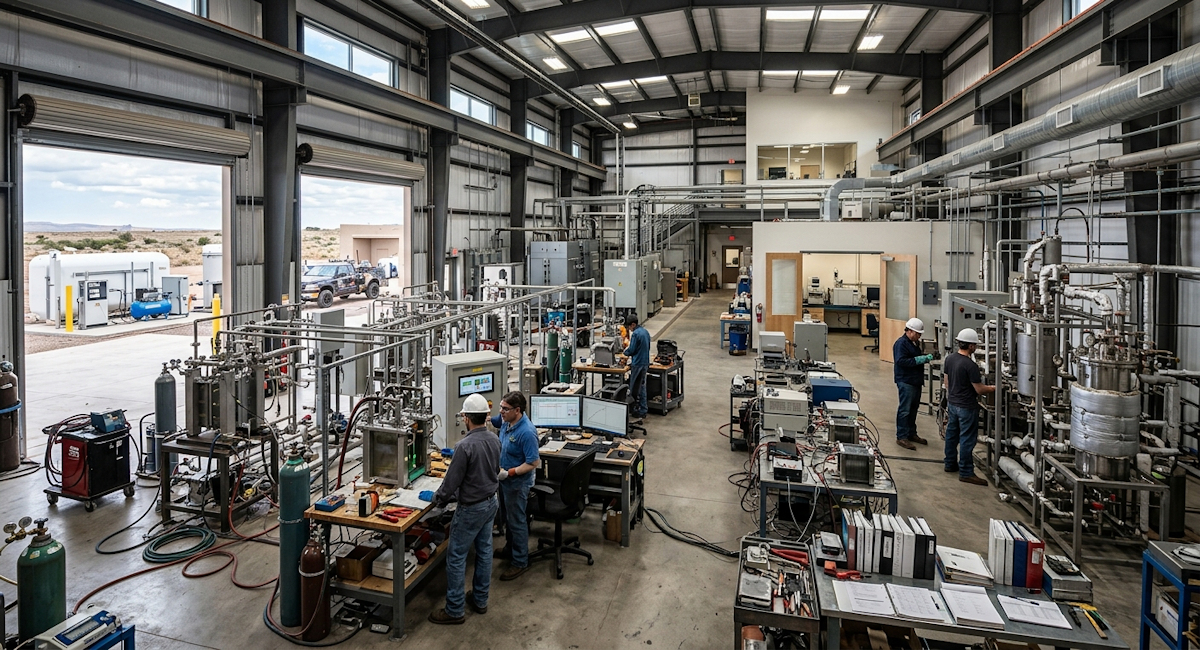
At Analex Laboratories, the Gaffney Alternative Fuel Center stands as a premier research and development facility dedicated to advancing the technologies that will power a sustainable transportation and energy future. Located in New Mexico, Gaffney serves as a vital hub for the design, engineering, testing, and prototyping of hydrogen production systems, fuel cell technologies, and alternative fuel synthesis pathways. The facility focuses exclusively on front-end development activities, providing the technical innovation and validation necessary for commercial partners to bring advanced alternative fuel technologies from concept through demonstration and toward market deployment. By concentrating on early-stage research, Gaffney accelerates the development of clean fuel systems that will decarbonize hard-to-electrify sectors including heavy transportation, aviation, and industrial processes.
The physical campus of Gaffney encompasses a comprehensive complex designed specifically for alternative fuel research and development. The main research building features high-bay laboratory spaces with specialized ventilation systems for handling hydrogen and other gaseous fuels, along with climate-controlled environments for sensitive electrochemical research. The facility includes a dedicated electrolyzer testing hall with electrical infrastructure capable of supporting megawatt-scale electrolysis systems, and fuel cell laboratories with load banks and diagnostic equipment for evaluating power generation performance. A specialized fuels synthesis wing houses high-pressure reaction vessels, distillation columns, and catalytic reactor systems for producing synthetic liquid fuels. The campus features an outdoor testing area with hydrogen storage tanks, refueling station demonstration equipment, and vehicle integration bays for testing fuel system components. Supporting these technical spaces are collaborative engineering offices, materials characterization laboratories, and safety systems including hydrogen detection networks and emergency ventilation capabilities. The facility also includes a dedicated analytical laboratory with gas chromatographs, mass spectrometers, and calorimetry equipment for fuel quality analysis.
Gaffney maintains an extensive inventory of specialized equipment essential for alternative fuel research and development. The hydrogen production laboratory operates multiple electrolyzer test stations including proton exchange membrane, alkaline, and solid oxide configurations, each with integrated power supplies and gas purification systems. The fuel cell testing area features programmable electronic loads, impedance spectroscopy systems, and thermal cycling chambers for evaluating stack performance and durability. The fuels synthesis laboratory maintains high-pressure autoclaves, fixed-bed catalytic reactors, and membrane separation systems for converting hydrogen and carbon dioxide into liquid hydrocarbons. The facility includes materials testing equipment such as differential scanning calorimeters, thermogravimetric analyzers, and mechanical testing frames for evaluating catalysts, membranes, and storage materials. Hydrogen storage research utilizes high-pressure compression systems, cryogenic cooling equipment, and metal hydride testing apparatus. The infrastructure testing area features complete refueling station components including compressors, dispensers, and storage vessels for validating hydrogen delivery systems. Computational resources include process simulation software, computational fluid dynamics packages, and molecular modeling tools for catalyst design.
The operational methodology at Gaffney follows a systematic development pipeline that transforms conceptual fuel technologies into validated prototypes ready for commercial scale-up. Research teams begin with materials synthesis and characterization, utilizing high-throughput screening methods to identify promising catalysts and electrode materials. Component-level testing progresses through iterative design cycles, with each iteration subjected to performance evaluation, durability testing, and safety validation. System integration activities combine multiple components into cohesive demonstration units, validating control strategies and operational procedures under realistic conditions. Fuel quality testing ensures that synthetic products meet specifications for transportation and industrial applications. Throughout this process, rigorous safety protocols govern all activities involving high pressures, flammable gases, and reactive chemicals.
Cutting-Edge Specialties
- Advanced Electrolyzer System Development
Gaffney maintains a leading research program focused on high-efficiency water electrolysis systems for producing green hydrogen using renewable electricity. Engineers develop proton exchange membrane electrolyzers with advanced catalyst coatings and optimized membrane electrode assemblies, alkaline electrolyzers with improved electrode materials and separator technologies, and solid oxide electrolyzers that operate at elevated temperatures to achieve superior efficiency. The program encompasses stack design for high-pressure operation, thermal management systems, and power electronics for coupling with variable renewable generation. Testing protocols evaluate hydrogen production rates, energy consumption per kilogram of hydrogen produced, degradation rates under continuous operation, and response characteristics to fluctuating power inputs. The research addresses manufacturing processes for scaling electrolyzer production, quality control methods for ensuring stack performance, and system integration strategies for coupling with solar and wind resources. This specialty supports the development of cost-competitive green hydrogen production systems capable of achieving production cost targets.
- Fuel Cell Technology and System Integration
The facility operates a dedicated division for developing fuel cell systems that convert hydrogen into electrical power with high efficiency and minimal emissions. Researchers investigate proton exchange membrane fuel cells for transportation applications, solid oxide fuel cells for stationary power generation, and hybrid systems that combine multiple fuel cell technologies. The program encompasses membrane electrode assembly fabrication, bipolar plate design for optimized gas distribution and water management, and system integration including thermal management, humidification, and power conditioning subsystems. Testing facilities evaluate power output and efficiency across varying load conditions, durability through thousands of operational hours, and cold-start performance for transportation applications. The research addresses fuel cell system cost reduction through materials optimization and manufacturing process development, along with degradation mitigation strategies for extending operational lifetime. This specialty supports the development of reliable, cost-effective fuel cell systems for vehicles, backup power, and distributed generation applications.
- Synthetic Fuel Synthesis and Power-to-Liquid Technology
Gaffney conducts intensive research into processes that convert green hydrogen and carbon dioxide into liquid hydrocarbon fuels suitable for existing engines and infrastructure. Engineers develop catalytic reactor systems for Fischer-Tropsch synthesis, methanol production pathways, and upgrading processes for creating gasoline, diesel, and jet fuel specifications. The program encompasses catalyst development for selective carbon-carbon bond formation, process optimization for maximizing fuel yield and minimizing byproduct formation, and heat integration strategies for improving overall energy efficiency. Testing facilities include high-pressure reaction systems, product separation and purification equipment, and analytical systems for characterizing fuel properties including cetane number, octane rating, and cold-flow characteristics. The research addresses feedstock flexibility including carbon dioxide from industrial sources and direct air capture, along with techno-economic analysis for commercial viability. This specialty supports the development of drop-in liquid fuels that enable decarbonization of aviation, shipping, and heavy-duty transportation without requiring new engine technologies or fuel distribution infrastructure.
- Hydrogen Storage and Delivery Systems
The facility maintains an active program developing technologies for storing and transporting hydrogen in forms suitable for various end-use applications. Researchers investigate high-pressure compressed gas systems with advanced composite pressure vessels, cryogenic liquid hydrogen storage with optimized insulation and boil-off management, and solid-state storage using metal hydride materials that absorb hydrogen at moderate pressures and temperatures. The program encompasses materials development for lightweight, high-capacity storage media, system design for refueling station operations, and thermodynamic modeling of storage system performance. Testing facilities include pressure cycling apparatus for evaluating vessel fatigue life, thermal cycling chambers for storage material characterization, and flow testing systems for validating dispensing equipment. The research addresses safety systems for leak detection and mitigation, codes and standards development for storage system certification, and economic analysis of different storage approaches for various applications. This specialty supports the development of hydrogen infrastructure necessary for widespread adoption of fuel cell vehicles and industrial hydrogen applications.
- Alternative Fuel Infrastructure and Integration
Gaffney engineers complete fueling systems that integrate hydrogen production, storage, and dispensing into cohesive infrastructure solutions. The research focuses on refueling station architectures that minimize cost and maximize availability, compression systems for achieving vehicle tank pressures, and dispenser designs that ensure safe, rapid fueling. The program encompasses blending systems for hydrogen injection into natural gas pipelines, carrier systems using ammonia or liquid organic compounds for hydrogen transport, and conversion systems for releasing hydrogen at the point of use. Testing utilizes the facility's outdoor demonstration area to validate complete system operation, evaluate fueling protocols, and verify compliance with safety standards. The research addresses grid integration strategies for electrolytic hydrogen production, demand response capabilities for supporting electrical grid stability, and lifecycle analysis for quantifying environmental benefits. This specialty supports the development of comprehensive alternative fuel ecosystems that enable practical, cost-effective deployment of hydrogen and synthetic fuel technologies across transportation and industrial sectors.