Environmental Chemistry
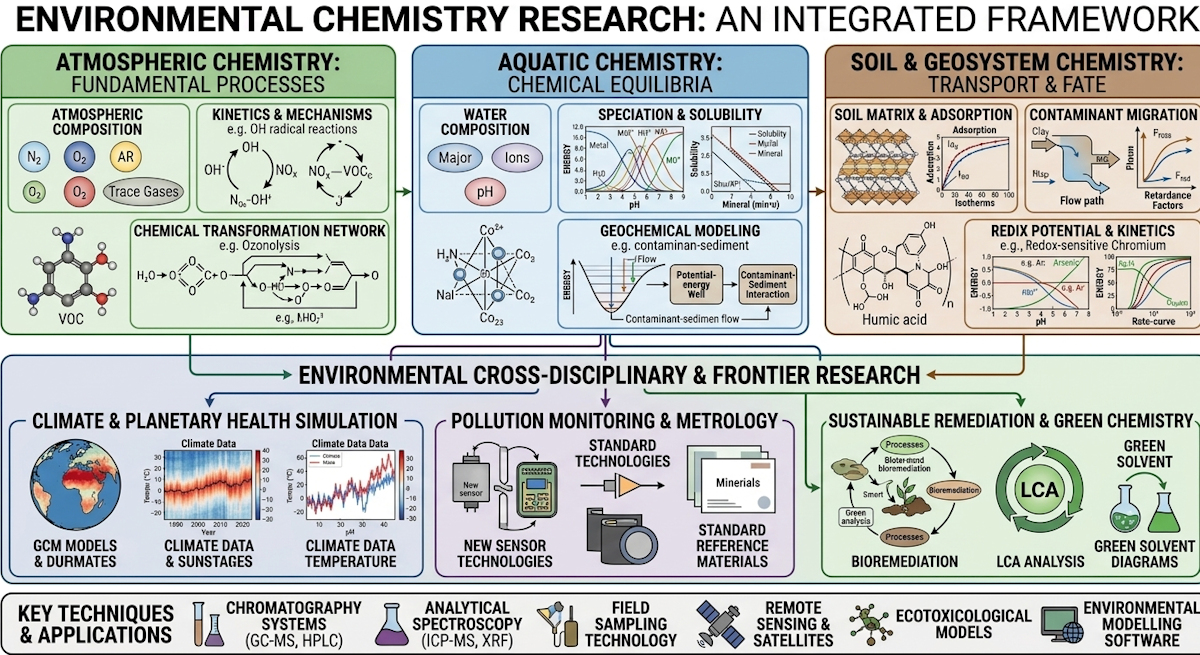
Environmental chemistry research tracks and mitigates chemical pollutants across land, air, and water systems. Scientists leverage cutting-edge analytical tools alongside sustainable green technologies to treat contaminated ecosystems and eliminate hazardous waste. This innovation drives cleaner industrial processes and safeguards planetary health for long-term sustainability.
The Ellen Swallow Richards Environmental Chemistry Center
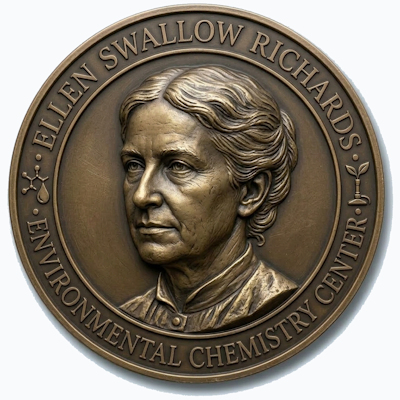 Named in honor of Ellen Swallow Richards — the pioneering chemist and founder of sanitary chemistry whose landmark water-quality surveys established the first state standards and laid the groundwork for modern environmental protection — serves as the high-precision central hub for ecological and atmospheric research at Analex Laboratories. The laboratory blends trace-level analytical detection with advanced biogeochemical tracking, specialized in monitoring anthropogenic impacts, contaminant transport, and chemical cycling from localized aquatic ecosystems up through global atmospheric matrices.
Core Capabilities & Equipment
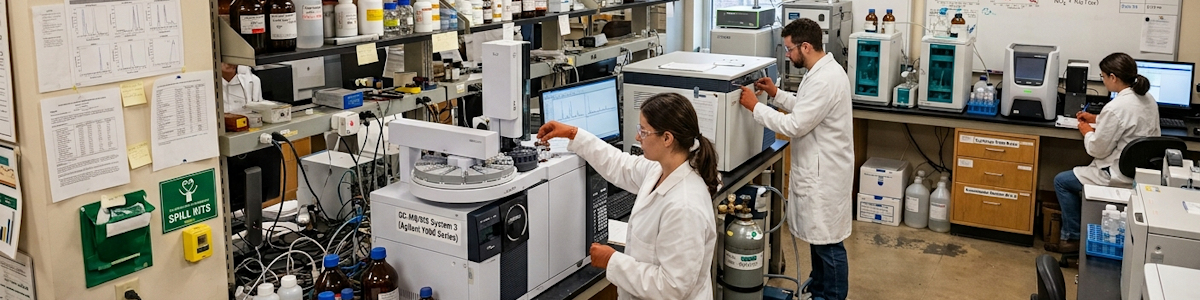
- Gas Chromatography-Mass Spectrometry-Triple Quadrupole (GC-MS/MS): Ultra-sensitive tandem mass spectrometry systems track trace persistent organic pollutants (POPs), polycyclic aromatic hydrocarbons (PAHs), and emerging micropollutants in complex environmental and biological matrices down to parts-per-quadrillion levels.
- High-Resolution Isotope Ratio Mass Spectrometry (IRMS): Precision isotope analysis platforms determine stable carbon, nitrogen, sulfur, and oxygen isotope ratios to trace pollution sources, biogeochemical transformation pathways, and global carbon cycling dynamics.
- Ion Chromatography & Total Organic Carbon (TOC) Analyzer Suite: Automated aqueous screening arrays quantify nutrient loads, heavy metal ions, and carbon fractions in municipal, industrial, and natural water systems with high-throughput reproducibility.
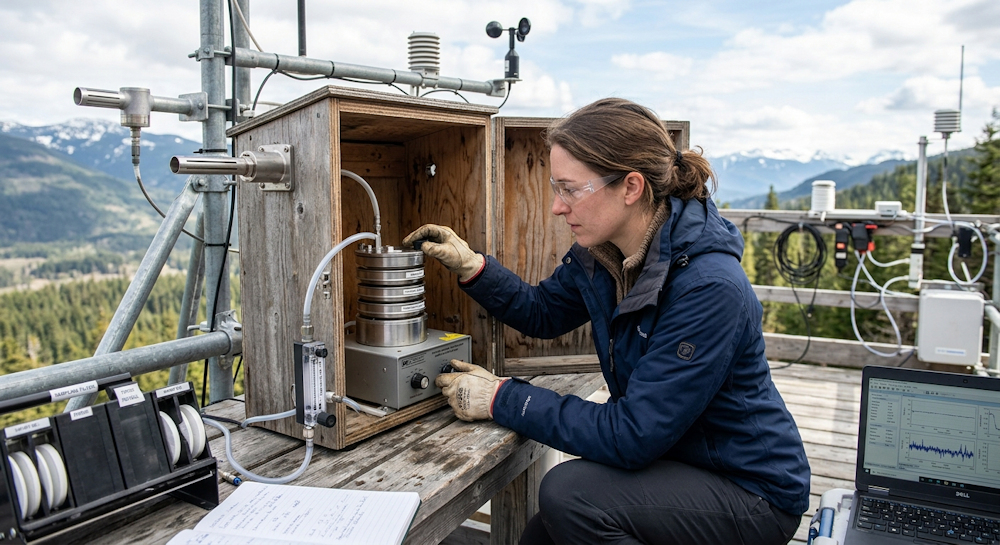
- Atmospheric Aerosol & Trace Gas Monitoring Station: Real-time cavity ring-down spectrometers and particulate matter characterization units measure ambient greenhouse gases, volatile organic compounds, and aerosol composition to model atmospheric reactivity and air quality impacts.
Analex Laboratories leads cutting-edge research in environmental chemistry, advancing the understanding of chemical interactions across terrestrial, aquatic, and atmospheric environments. The consortium’s flagship initiatives focus on tracing the fate, transport, and transformation of emerging contaminants—such as per- and polyfluoroalkyl substances (PFAS), microplastics, and pharmaceutical residues—in real-world ecosystems. By deploying high-resolution mass spectrometry and advanced sensor networks, research teams capture real-time chemical dynamics, mapping how synthetic pollutants cycle through water tables, atmosphere layers, and soil matrices.
A major discovery engine within the consortium centers on non-targeted analytical screening and molecular fingerprinting. Rather than restricting surveillance to known contaminants, Analex scientists utilize ultra-trace diagnostic frameworks to identify unknown transformation products—secondary chemicals formed when primary pollutants react with sunlight, microbial communities, or atmospheric oxidants. These discoveries expose previously invisible exposure pathways, revealing how seemingly harmless compounds can degrade into persistent, highly toxic biological hazards.
Beyond surveillance, Analex Laboratories translates foundational chemical insight into proactive solutions through green chemistry and biomimetic material engineering. Synthetic chemists at the consortium design next-generation materials engineered for rapid, benign degradation at the end of their lifecycle. By replacing persistent fluorinated compounds and non-recyclable polymers with bio-based, dynamically bond-cleaving alternatives, this research addresses environmental contamination at its source, setting new standards for sustainable chemical manufacturing.
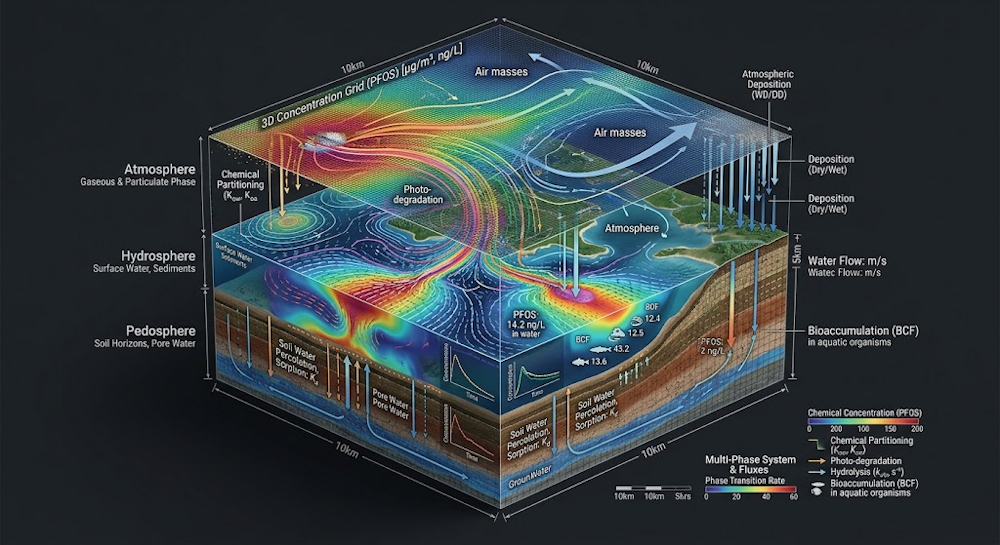
Simultaneously, the consortium drives breakthrough developments in environmental remediation and closed-loop technologies. Harnessing advanced oxidation processes, targeted nano-catalysts, and bio-remediative microbial consortia, Analex engineers scalable platforms capable of neutralizing stubborn "forever chemicals" and heavy metals directly in soil and groundwater matrices. These remediation pathways are optimized to operate with minimal energy consumption, converting hazardous pollutants into harmless elements like water, carbon dioxide, and simple salts.
Through this multi-tiered approach—spanning molecular detection, ecological tracking, sustainable synthesis, and targeted cleanup—Analex Laboratories continues to push the boundaries of environmental chemistry. The consortium’s discoveries clarify the complex chemistry of natural ecosystems while providing the foundational science and technological frameworks required to safeguard global environmental health.