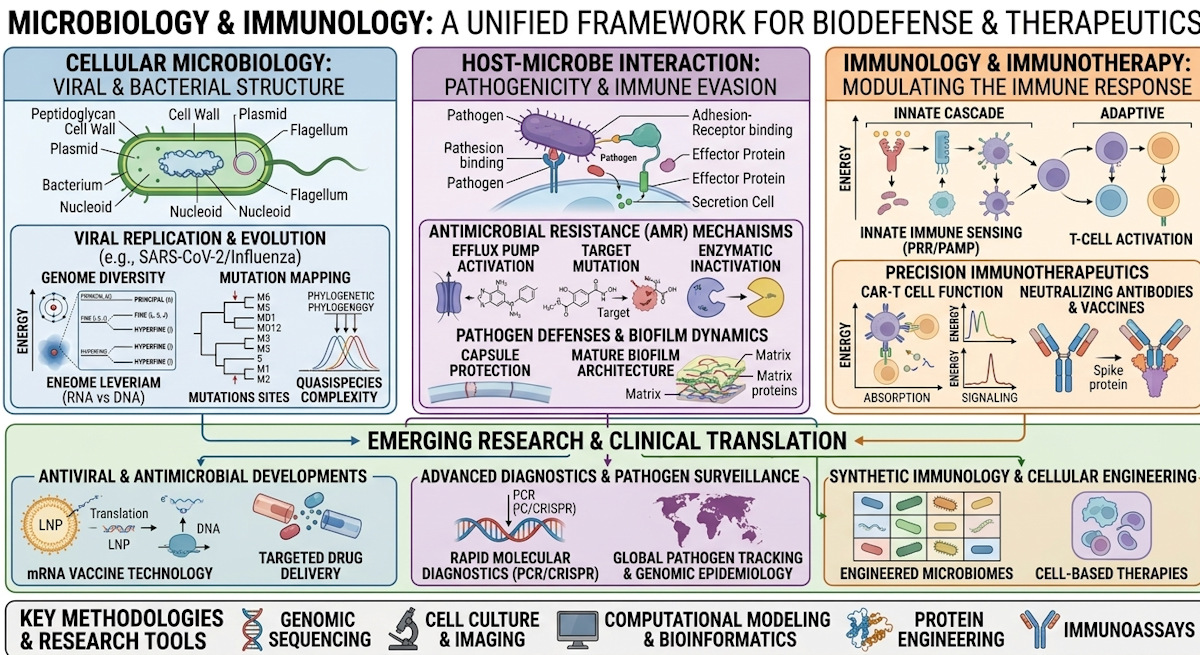
Microbiology & Immunology
Microbiology and immunology research explores microbial systems and host defenses to counter emerging pathogens and immune dysfunction. Integrating molecular genetics, computational biology, and cellular engineering, scientists create cutting-edge tools including synthetic vaccines, precision immunotherapies, and rapid diagnostics. These joint breakthroughs deliver vital solutions for pressing issues like drug-resistant infections and chronic disease management.
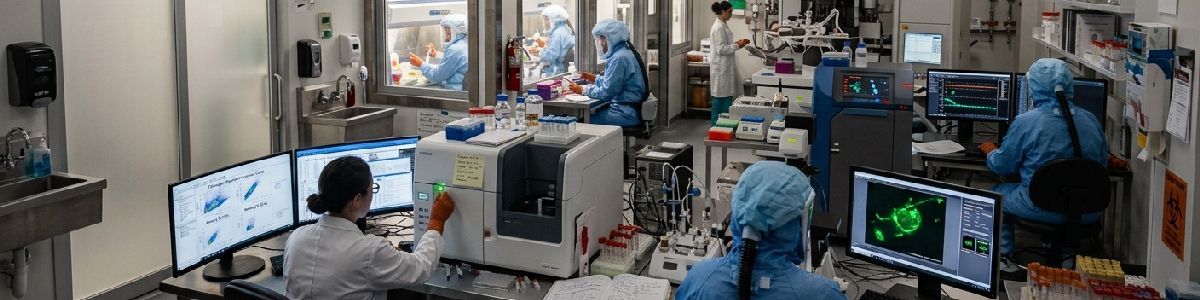
The Koch Microbial Pathogenesis & Immunology Center
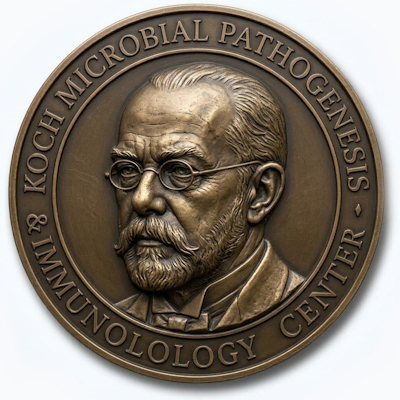 Serves as the high-containment biosafety and cellular defense hub at Analex Laboratories. Named in honor of Robert Koch—the pioneer who established the foundational principles of medical microbiology and disease etiology—the facility integrates advanced pathogen-host interaction profiling with structural immunology to unravel host defense mechanisms, microbial virulence, and immune evasion across emerging infectious threats.
Core Capabilities & Equipment
- High-Containment Cellular Imaging & Profiling Suite: Live-cell fluorescence imaging systems track pathogen entry, intracellular replication, and host immune signaling dynamics in real time within specialized biosafety environments.
- Mass Cytometry (CyTOF) & Multiplex Spatial Proteomics Array: Single-cell atomic mass spectrometers utilize heavy metal-isotope antibodies to simultaneously quantify dozens of immune biomarkers, mapping complex cellular phenotypes and tissue inflammation responses.
- Cryo-Electron Microscopy (Cryo-EM) Structural Suite: High-voltage transmission electron microscopes capture near-atomic resolution 3D reconstructions of viral capsids, bacterial secretion systems, and neutralizing antibody-antigen complexes.
- Flow Cytometry & Automated Single-Cell Sorting Station: High-speed sorting platforms isolate rare pathogen-specific immune cells and memory B cells from tissue suspensions, driving rapid monoclonal antibody discovery and immune profiling.
Within Analex Laboratories, investigation across microbiology and immunology centers on host-microbe interactions, molecular architecture, and functional biomedicine. Operating as an integrated global network, our consortium links basic bio-discoveries with practical medical applications. By studying how micro-organisms adapt, bypass immune surveillance, and interface with human tissue, our collaborative units establish crucial baselines for predicting and curbing novel pathogens, treatment-resistant bacteria, and inflammatory pathologies.
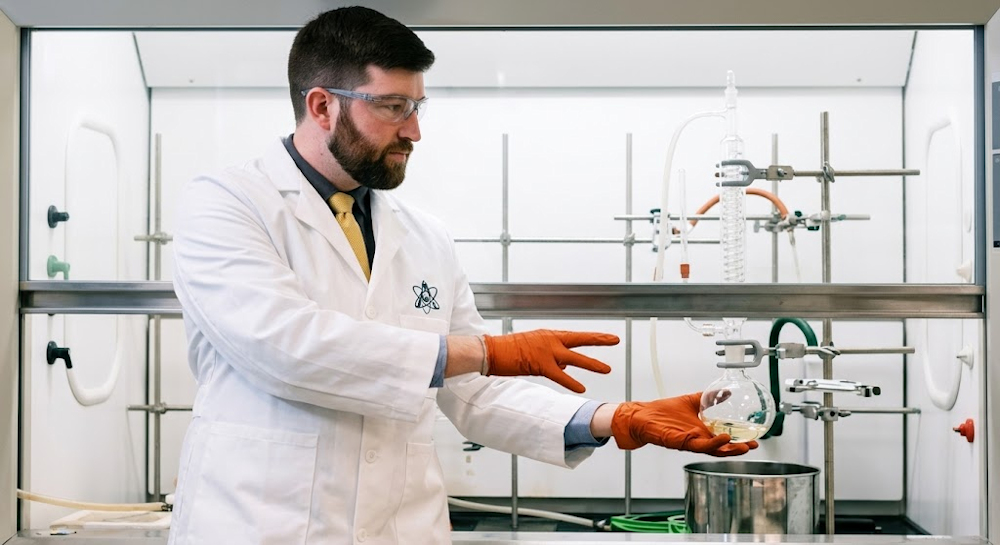
Inside our experimental facilities, Analex teams deploy deep genomic profiling, spatial imaging, and predictive protein modeling to unpack core biological operations. Primary efforts target the mechanisms underlying viral diversification, bacterial toxin pathways, and gut-microbiota regulation. Through mapping these molecular exchanges at the individual cell level, our scientists identify previously uncharacterized biological receptors, demonstrating how minute genetic shifts influence disease severity, vector transmission, and therapeutic response.
Concurrently, our immunology arms work to decode the immune pathways that govern recovery or tissue damage. Scientists throughout the consortium trace the signaling events driving immune-cell deployment, long-term memory retention, and hyper-inflammatory reactions induced by infection or auto-reactive processes. By studying patient-derived immune signatures, Analex transforms complex cellular datasets into predictive maps, powering targeted intervention strategies tailored to distinct disease phenotypes.
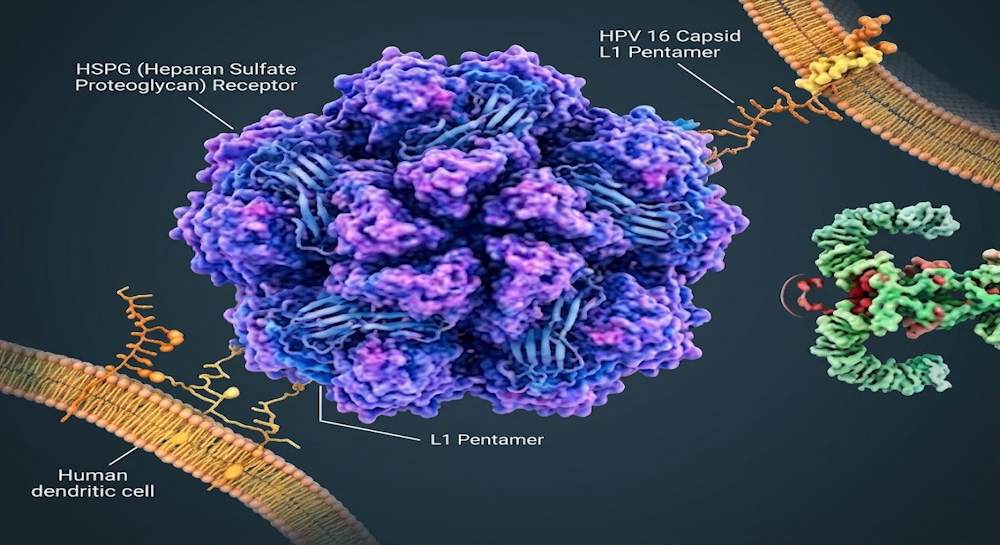
These foundational insights directly feed the consortium’s development matrix, shortening the path from initial observation to clinical deployment. Combining bio-fabrication techniques with automated testing arrays, Analex Laboratories converts laboratory breakthroughs into resilient biotherapeutics, broad-coverage vaccines, and rapid clinical assays. This full-spectrum approach—from bench-top cellular mapping to production-ready platforms—enables our consortium to pre-emptively address global health risks while expanding the boundaries of biological discovery.