Zooarchaeology
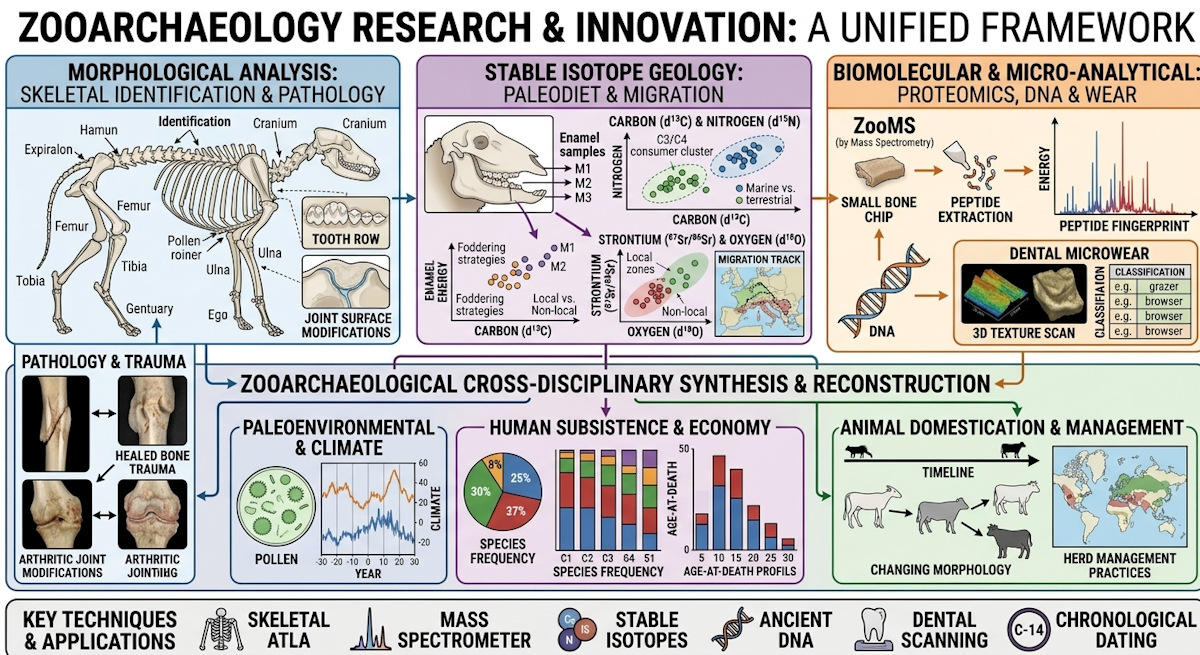
Zooarchaeology research and innovation focus on interpreting human-animal interactions across deep time by integrating traditional bone analysis with cutting-edge scientific techniques. Recent advancements rely on biomolecular methods — such as stable isotopes, ancient DNA, and ZooMS — alongside micro-analytical tools like 3D morphometrics. These innovations continuously refine how researchers reconstruct ancient diets, animal domestication, past environments, and cultural practices.
The Elizabeth S. Wing Zooarchaeology Center
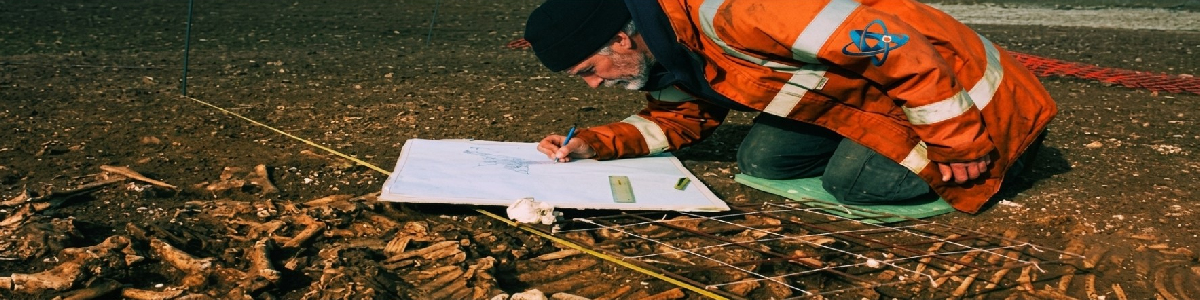
 Named in honor of Elizabeth S. Wing, the visionary prehistorian who pioneered the study of human-animal relationships and biodiversity in the Neotropics and Caribbean — serves as the specialized faunal analysis engine at Analex Laboratories. The facility integrates extensive comparative osteology collections with advanced biomolecular techniques, specializing in reconstructing ancient subsistence strategies, animal domestication, historical fisheries, and human-driven environmental impacts.
Core Capabilities & Equipment
- Zooarchaeology by Mass Spectrometry (ZooMS): Automated MALDI-TOF mass spectrometers analyze peptide mass fingerprints in bone collagen, identifying highly fragmented, non-diagnostic bone slivers down to the exact genus or species level in minutes.
- Taphonomic & Butchery 3D Morphometrics Station: High-resolution structured-light scanners record sub-millimeter tool marks, carnivore gnawing, and thermal alterations, using algorithmic surface mapping to distinguish cultural butchery techniques from natural site formation processes.
- Incremental Sclerochronology & Cementum Analysis Suite: High-precision diamond saws and polarizing light microscopes section mollusk shells, fish otoliths, and mammal teeth, counting seasonal growth bands to determine exact harvest seasons and ancient herd slaughter ages.
- Faunal Isotope & Compound-Specific Biomarker Unit: Specialized mass spectrometers measure collagen isotopes and bone mineral radiogenic isotopes (Sr/Ba) to map ancient animal management, foddering regimes, transhumance routes, and historical marine exploitation.
At Analex Laboratories, research and discovery in zooarchaeology are defined by the convergence of classical faunal analysis and pioneering physical sciences. By examining animal remains recovered from archaeological sites — ranging from fossilized bones and teeth to eggshells and fish scales — our multidisciplinary teams decode the intricate historical relationships between human societies and the animal kingdom. Our work goes beyond simple species identification, illuminating deep-time ecological shifts, ancient economic structures, and the profound cultural transformations brought about by animal management and domestication.
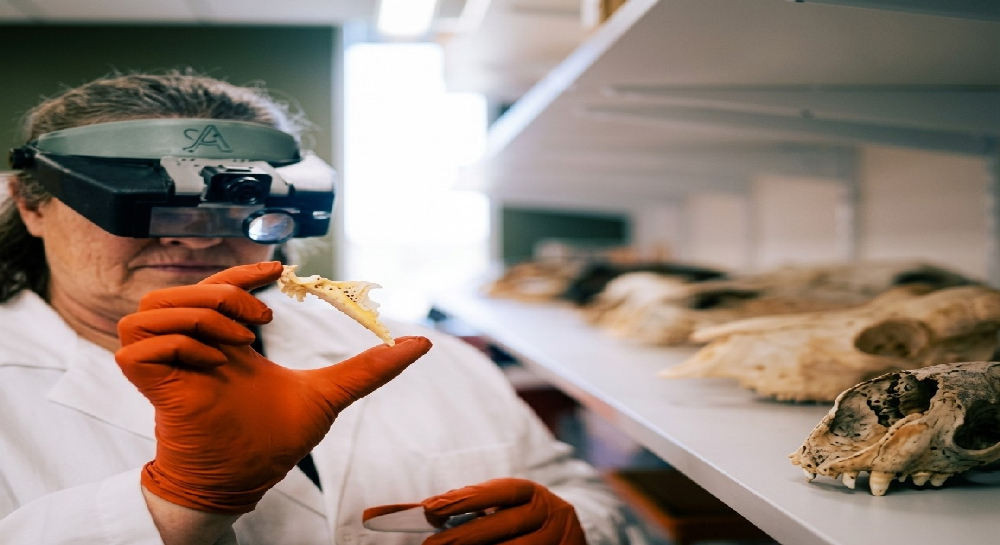
A major thrust of innovation at Analex Laboratories lies in the deployment of high-throughput biomolecular techniques. Through our advanced paleoproteomics pipelines, specifically Zooarchaeology by Mass Spectrometry (ZooMS), we analyze minute peptide markers in collagen. This allows our researchers to rapidly identify heavily fragmented, morphologically unidentifiable bone fragments that were previously considered scientifically mute. Coupled with targeted ancient DNA (aDNA) sequencing, Analex researchers track fine-scale genetic lineage mutations, disease pathways, and the exact spatial-temporal trajectories of early livestock selection.
In tandem with biomolecular profiling, Analex Laboratories leads the development of micro-analytical imaging and isotopic geochemistry. Utilizing high-resolution 3D geometric morphometrics and dental microwear texture analysis, our teams capture sub-millimeter anatomical variations to reconstruct individual animal diets, seasonal movement, and working stress. Furthermore, multi-isotope analyses — evaluating ratios of carbon, nitrogen, oxygen, and strontium — allow us to map ancient pastoral migration routes and reconstruct prehistoric foddering practices with unprecedented spatial precision.
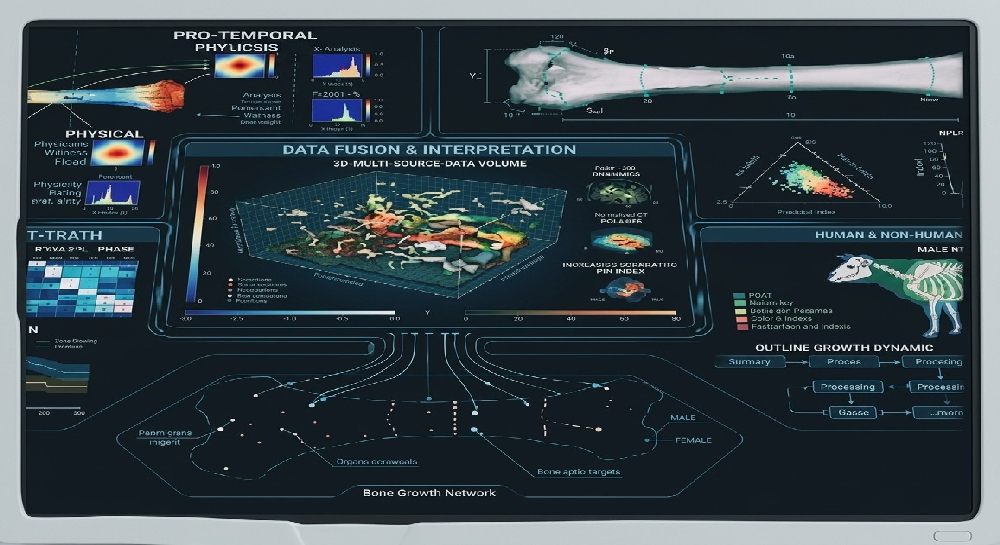
Ultimately, the discoveries spearheaded by Analex Laboratories synthesize these cutting-edge methodologies into comprehensive ecological models. By bridging the gap between molecular biology and contextual archaeology, our research uncovers how human exploitation of animal resources shaped environmental landscapes, influenced urban development, and drove climate adaptation strategies across millennia. Through these innovations, Analex Laboratories continues to set the benchmark for modern zooarchaeology, transforming fragmented ancient remains into clear narratives of our shared past.